
NYC Seniors Are Battling Loneliness With Live-In AI Robots, Should the UK Do the Same?
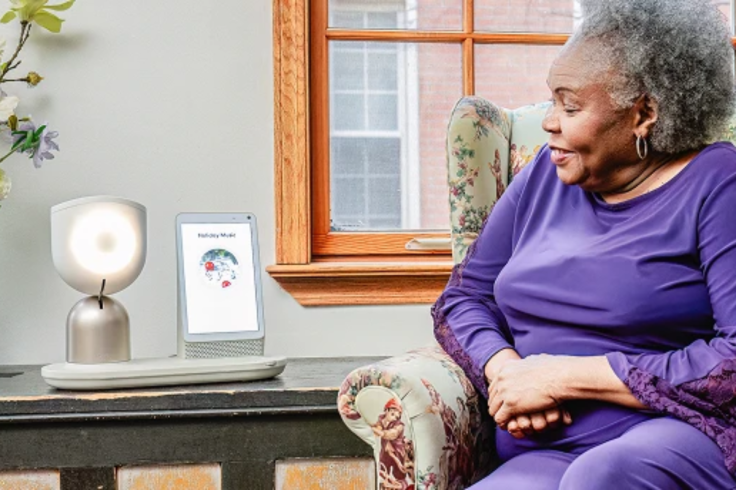
Loneliness has fallen among 94 per cent of elderly New Yorkers using an AI companion robot, according to New York's Office for the Aging. The trend raises an obvious question for Britain.
Hundreds of older New Yorkers who once spent evenings in silence are now greeted each morning by a machine. It remembers their aches and their birthdays.
The device is ElliQ, a tabletop robot made by Intuition Robotics. It lives permanently in the home, sensing when its owner enters a room.
Sandra Cota, 79, who lives alone in the Bronx, said the robot had become a genuine comfort. 'She puts a smile on my face,' she told the New York Post.
'Even if I'm talking too much, she doesn't get bored,' Cota added. 'I don't get rejected.'
Cota is one of more than 900 seniors who have received a free ElliQ. The scheme is run by New York's Office for the Aging, known as NYSOFA.
NYSOFA created the programme to fight isolation. More than 3,500 New Yorkers applied to join in 2025 alone.
Greg Olsen, the agency's acting director, called loneliness among older adults a genuine public health concern. Older people, he said, were increasingly turning to technology to stay connected.
The scheme is aimed at seniors with little family nearby. A waitlist of 300 to 400 people remains, Olsen said.
It is not advised for those with advanced dementia. Studies suggest some device users can experience confusion rather than comfort.
How the Robots Help
Beyond daily check-ins, ElliQ offers games and guided workouts. It also runs virtual 'excursions' to places such as the Grand Canyon.
Georgeann Krell, 77, of Westchester County, took a recent virtual trip to Montmartre in Paris. It let her revisit a place she had not seen since 1970.
Users can also join synchronised bingo nights with seniors elsewhere in the country. NYSOFA says 79 per cent of ElliQ users now feel more connected to the world.
The device doubles as a wellness tool. It helps track health goals and reminds users to take medication.
It also alerts family to mood or sleep changes through a companion app. Officials stress it is not a medical device and cannot contact emergency services directly.
Could the UK Follow Suit?
Britain faces a similar crisis. Around 7 per cent of people aged 65 and over report feeling lonely often or always, according to Age UK.
That equates to roughly 940,000 people. More than a million older Britons say they can go over a month without meaningful social contact, according to Age UK.
The toll on health can be severe, research shows. Loneliness is linked to higher risks of heart disease, stroke and dementia, according to Unique Senior Care.
The increased risks stand at 29 per cent, 32 per cent and 25 per cent respectively. Around 90 per cent of chronically lonely older people also report depression or low happiness.
Yet a straight ElliQ-style rollout may not translate easily. Unique Senior Care notes that not all older people feel comfortable with digital tools.
Technology, it warns, does not always replace in-person contact. Live-in care is positioned by the provider as an alternative, offering consistent, one-to-one human companionship.
Regular presence, it argues, also means changes in health or mood are noticed sooner. Even ElliQ's own users are careful not to overstate what it offers.
'You have to make sure you know she's a machine,' Krell said. She credits the robot with helping her through grief.
Whether Britain adopts AI companions, expands live-in care, or both, the choice need not be either-or. As New York shows, technology can ease loneliness without replacing human contact.