
Remember Playing Outside Until the Street Lights Came On? British Children Now Get 25 Minutes a Week
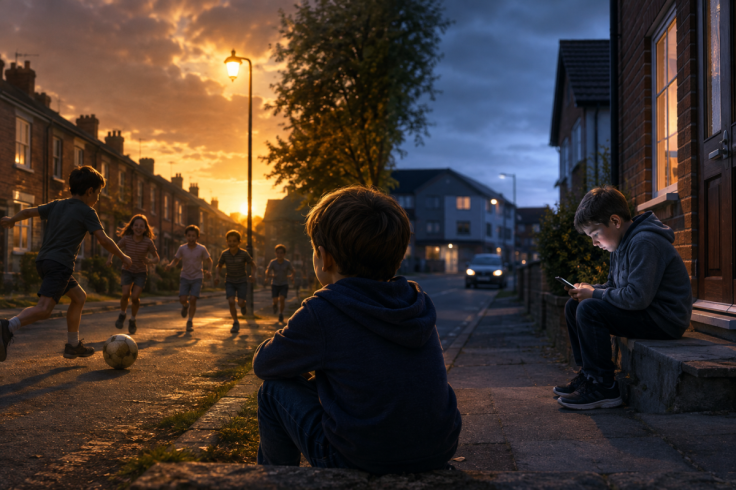
British children spend less than 25 minutes a week playing out in their own street, a survey of nearly 2,000 parents and carers has found. Their parents stayed out for hours, until the street lights came on.
Children are also nearly 11 before they are let out to play alone, more than a year older than their parents were. Researchers at the University of Exeter call it a generational play gap.
Independent outdoor play is linked to better health and wellbeing, from lower anxiety to more physical activity. Researchers say policymakers should now treat play as a public health priority.
The Generational Play Gap
The British Children's Play Survey questioned parents and carers of children aged five to 11. It found children are now allowed out to play alone at an average age of 10.8.
Their own parents were given that freedom at 9.7, the survey found. Researchers described that as a significant delay.
More than half, 56 per cent, let their children play out later than they had been allowed. Researchers warn that children are losing the fresh air and independence earlier generations took for granted.
That weekly 25 minutes of street play is the lowest figure in the report. For five to 11-year-olds, less than half of all play now happens outdoors.
Across most of Britain, outdoor and adventurous play falls steadily with age. In London, though, it climbs again from around age nine.
Why Children Are Staying Indoors
Experts at the Outdoor Play Research Centre blame a lack of accessible, good-quality places to play. They also point to more screen time, busy roads and changing social norms.
An earlier report linked the shift to changes in working patterns over the past 30 years. Parents said they had no time to watch their children, while some children lacked the clothes to stay warm or cool.
The centre is opening at Exeter to examine why children play outdoors alone less than ever. It will also design and test solutions with national organisations and charities.
Professor Helen Dodd, a leading expert in child psychology and play, directs the centre. She said children were missing out on freedom that earlier generations enjoyed.
She recalled 'fond childhood memories of playing out until the street lights came on' and a first taste of freedom. 'We want to see a step change for children's independent outdoor play,' she said.
She has previously asked for 'keep off the grass' and 'no ball games' signs to be removed from green spaces. Such signs, she argued, put children off playing there.
What Children Miss Out On
The centre's researchers have linked more outdoor play to fewer symptoms of anxiety and depression. They also found more happiness among five to 11-year-olds who play out often.
Recent Exeter research also looked at younger children. Those who played outdoors more often at ages two, three and four were more likely to keep good mental health into middle childhood.
Each extra day of outdoor play in a typical week lifted the odds of good mental health by age eight. The gain was between 6 and 14 per cent.
The centre says it wants to provide robust evidence that shapes policy and practice. It will bring together leading experts in the field to do that.
Amber Ogunsanya-William, an inclusive play consultant, said play was not a privilege. 'It's a fundamental part of development, ensuring children have the tools they need to mature into adults,' she said.
Frequently Asked Questions
- What is the generational play gap?The generational play gap refers to the difference in the age at which children are allowed to play outdoors independently compared to previous generations.
- Why is outdoor play important for children?Outdoor play is linked to better health and wellbeing, including lower anxiety, more physical activity, and improved mental health.
- What factors contribute to children playing outdoors less?Factors include lack of accessible play areas, increased screen time, busy roads, changing social norms, and changes in working patterns.
- What are the benefits of outdoor play for mental health?Outdoor play is associated with fewer symptoms of anxiety and depression and greater happiness among children.