
Could AI Soon Predict Your Disease Risk? Health Experts Debate How Far The Technology Should Go
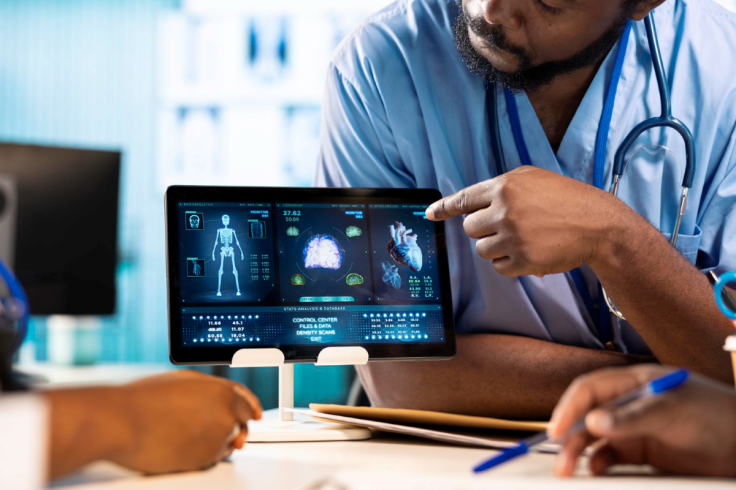
Artificial intelligence (AI) is moving beyond helping doctors analyse medical records or scan images. The technology is increasingly being developed to predict who could be at risk of developing certain diseases, potentially giving patients more time to prevent or manage serious conditions.
But as AI becomes more capable of making health predictions, experts are also asking an important question: how much should patients and doctors trust a machine when the stakes are so high?
At an Axios health event in Boston on 10 September, healthcare and biotech leaders discussed the growing role of AI in medicine, including its potential to accelerate drug development and predict disease risk.
AI Could Help Identify Disease Risk Earlier
One of the more advanced applications involves predicting an individual's future health risks before symptoms appear.
Dr Connie Lehman, founder and CEO of Clairity, said the company's AI model is designed to predict future breast cancer risk. However, she noted that some healthcare practitioners remain hesitant about incorporating AI tools into screening.
The potential benefit is significant. Instead of relying solely on a patient's current symptoms or traditional risk factors, AI could analyse large amounts of medical information and identify patterns that may be difficult for humans to detect.
That could eventually help doctors determine which patients may benefit from earlier screening, closer monitoring, or preventive interventions.
AI is already being used in healthcare for some forms of early detection. In the UK, for example, the NHS uses AI to help identify serious health problems, including strokes and skin cancers.
The Technology Still Has Limits
Being able to identify a statistical pattern is not the same as knowing what will happen to an individual patient.
AI systems can produce incorrect or misleading results, particularly when the data used to develop them do not adequately represent the populations in which they are deployed. A prediction could also cause unnecessary anxiety if a patient is incorrectly classified as being at high risk.
That is why experts at the Axios event stressed that advances in AI should not remove humans from the decision-making process.
Yvonne Hao, chief operating officer and general partner at Flagship Pioneering, said AI-driven medical innovation should remain focused on curing disease and improving patient care while accounting for potential risks.
For patients, that means an AI-generated risk assessment is more likely to serve as another piece of information for a healthcare professional rather than a definitive diagnosis.
Why Human Oversight Matters
The debate is increasingly moving from whether AI should be used in medicine to how it should be used safely.
Recent UK recommendations underline the same concern. A National Commission into the Regulation of AI in Healthcare, established by the Medicines and Healthcare products Regulatory Agency (MHRA), gathered evidence from more than 12,000 people over a year.
It found broad public support for healthcare AI, but with clear demands for strong safety standards, meaningful human oversight and transparency about when AI is being used.
The commission has recommended continuous monitoring of AI-enabled medical devices rather than relying solely on approval at the point of launch. It also proposed staged authorisation, allowing new AI systems to be introduced under close supervision before receiving broader approval.
Meanwhile, the US Food and Drug Administration is considering whether AI healthcare devices should be evaluated in a way comparable to doctors, highlighting how regulators are grappling with the technology's expanding role.
For now, AI may be able to spot patterns that humans miss, but experts appear to agree on one crucial point: predicting disease should not mean replacing medical judgement.
The most useful future may be one in which AI helps doctors see potential risks earlier while humans remain responsible for interpreting those predictions and deciding what happens next.