
Toddler Nearly Dies After Drinking Raw Goat Milk — California Farm Later Allowed to Resume Sales as 'Pet Food'
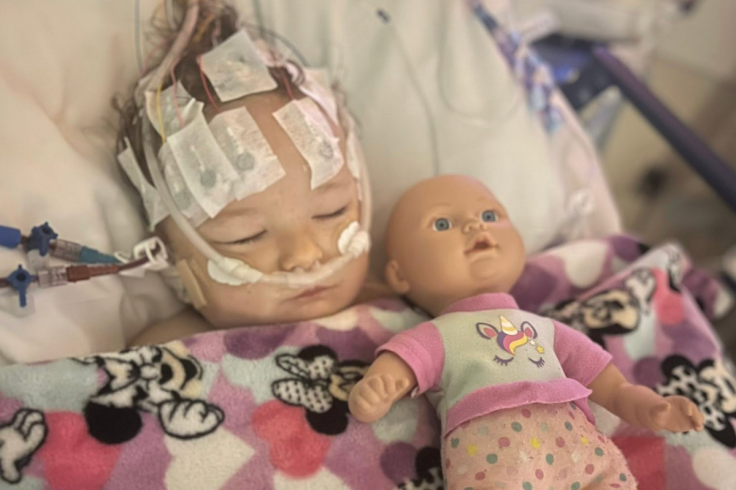
A 17-month-old girl nearly died from a severe E. coli infection that doctors suspected was linked to raw goat milk, but the unlicensed California farm that sold it received no fine and was later allowed to resume sales as 'pet food'.
The case was detailed in an investigation by ProPublica, which reviewed regulatory records and messages between the families and farm owner Courtney Baker.
Brooklyn Marris required a ventilator, dialysis and blood transfusions after developing haemolytic uraemic syndrome (HUS), a potentially life-threatening complication of E. coli. A second child who drank milk from the same farm was later hospitalised with HUS caused by the same strain.
Two Children Hospitalised With Same E. Coli Strain
Emily Marris, from Winchester in Riverside County, began buying raw goat milk from Baker's Moonlight Ridge farm in January 2025 while looking for an alternative to cow's milk for Brooklyn.
Messages showed Baker knew the toddler would be drinking the milk and later asked how she was responding to it. Marris and her husband also said Baker repeatedly assured them that her herd and milk were 'clean and tested'.
On 2 June, Brooklyn began vomiting after swimming lessons. Her condition deteriorated, and she was transferred to Rady Children's Hospital in San Diego, where she required intensive care as her kidneys began to fail.
Doctors diagnosed her with HUS, while testing confirmed E. coli O157. Infectious-disease doctors suspected the unpasteurised milk was the likely source.
That same day, Iris and David Galindo collected their first jug from Moonlight Ridge for their six-year-old daughter, Victoria. The couple said they told Baker the milk was for their child. Victoria was hospitalised on 13 June and diagnosed with HUS caused by the same E. coli strain as Brooklyn.
Farm Faced No Fine After Investigation
The illnesses prompted an investigation by the California Department of Food and Agriculture (CDFA). California requires producers selling raw milk for human consumption to be licensed and comply with sanitation, inspection and testing requirements.
Moonlight Ridge did not have such a licence. Selling raw milk for human consumption without one can result in fines of up to $10,000 and up to a year in jail. When investigators visited on 20 June, Baker maintained that her milk was intended only for pets. California permits unlicensed farms to sell raw milk if it is labelled for animal consumption.
Internal records showed regional supervisor Jill Soares questioned that explanation. 'She clearly knew the milk was going to a child,' Soares wrote.
Investigators issued a cease-and-desist order and violation notice, neither of which carried a financial penalty. A milk sample Baker said she had collected herself later tested negative for several pathogens, including E. coli. The sample was collected weeks after Brooklyn became ill and was not from the milk consumed by either child.
Farm Allowed to Resume Sales as 'Pet Food'
Following the negative results, regulators helped Baker comply with requirements allowing her to resume raw milk sales as pet food. The CDFA closed its investigation on 1 August 2025 after finding Baker had 'promoted raw milk for sale and sold unapproved milk products in commerce without a CDFA license'. No penalty was imposed.
Investigators said they could not establish that Baker had sold the milk for human consumption, so the case was not referred to prosecutors. Baker later moved to Arizona and reopened Moonlight Ridge. She denied that her milk caused the illnesses and pointed to the negative tests.
'Everything is sold as pet milk,' Baker said. 'What they choose to do with it is not my business.'
Families Sue Moonlight Ridge
Brooklyn survived but experienced developmental setbacks, a slight limp and night terrors. Doctors warned she could face long-term kidney problems, while Victoria also requires continued medical monitoring.
The families later filed a civil lawsuit against Baker and Moonlight Ridge, alleging they negligently sold contaminated raw milk presented as 'fit for human consumption'. The case is ongoing, and the allegations have not been proven in court.
Baker has said the farm will 'fully defend against the allegations by Plaintiffs'.