
Thinking of Getting Your Child a Pet? Study Reveals Which Animals May Be Better for Their Mental Health
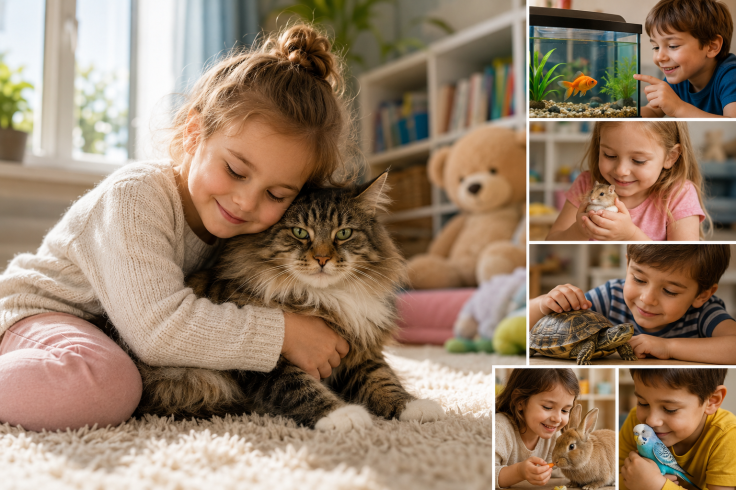
Not every pet suits a young child's mind. A long-running Spanish cohort study linked cats in the pre-school years to more mental health problems.
Children who consistently kept fish, turtles, hamsters rabbits or other small animals throughout early childhood seemed to have fewer internalising problems, the same study reported. Dogs and birds showed no clear benefit or harm.
For parents weighing up a first pet, that turns a simple 'yes or no' into a question of species. It also raises the question of how long the animal will stay.
What the Long-Term Study Found
The study followed families from pregnancy to the early school years. Its authors said they used questionnaires, clinical tests and environmental measurements.
The team looked at problems children keep inside, such as low mood and anxiety. It also tracked outward problems, including aggression and rule-breaking.
Children who had never lived with an animal recorded the most positive scores. Once adjusted for social class, sex and age, no difference remained for pets overall.
The same was true of dogs and birds, the researchers said. Their stand-out result was the link between cats in the pre-school years and more problems.
Small caged and tank pets pointed the other way, but only when kept consistently. That protective effect showed for boys and girls alike.
Why Cats May Be Different
The authors offered a few explanations, while stressing that none is proven. Cats tend to be more independent, which may limit emotional bonding.
Some families may also pick a cat because their child already has emotional needs, the paper suggested. Variables left out of the study may have shaped the results.
A further possibility sits in the same paper. An infection more common in cats than in other animals can pass to people, and is linked to behavioural problems.
Which Pet Suits Which Goal
No single animal suits every child, researchers working under a national health research partnership said. The right choice depends on what a family wants.
A dog pushes a household outdoors and lifts physical activity, they said. Watching fish, by contrast, can bring a feeling of calm.
Classroom research they describe points the same way. Children with attention difficulties who read to a real dog rather than a puppet shared more and behaved better.
Supervised play with guinea pigs lowered anxiety among the children taking part, the same work found. They also engaged more with classmates.
Steady Bonds Matter Most
A second pattern stood out. Children who lived with small animals regularly did better than those who had them only now and then.
The authors said that suggests a lasting bond matters more than sporadic contact. Small pets require simple, steady care rather than constant attention.
Such a bond can steady a child's emotions and stand in for a main caregiver who is away, the paper said. It also builds responsibility and empathy.
Summaries of research on the bond between people and animals agree. They link successfully caring for a pet to a stronger sense of purpose and self-esteem.
Pets are not right for every family, though. Early contact may protect children from allergies and asthma, recent studies suggest.
For those already allergic, an animal at home can do more harm than good, the same researchers noted. Bites are a further risk.
Children need to learn when to leave a pet alone, the partnership's specialists warn. Animals get tired and stressed too.
The Spanish team said its work focused on very young children, so more work is needed on older ones. Species matters, but so do the bond, age and upbringing.
Frequently Asked Questions
- What did the Spanish cohort study find about cats and children's mental health?The study linked cats in the pre-school years to more mental health problems in children.
- Which pets were found to have a protective effect on children's mental health?Fish, turtles, hamsters, and rabbits were reported to have a protective effect when kept consistently.
- Why might cats be different in their impact on children's mental health?Cats tend to be more independent, which may limit emotional bonding, and they can carry infections linked to behavioural problems.
- What factors should families consider when choosing a pet for their child?Families should consider what they want from a pet, such as increased physical activity or a calming presence, and the potential for steady emotional bonds.
- What are the benefits of children having steady bonds with small pets?Steady bonds with small pets can steady a child's emotions, build responsibility and empathy, and provide a sense of purpose and self-esteem.