
'I Went in There Crying': Chris Rock Opens up About Therapy and His Struggles With Learning Disorder
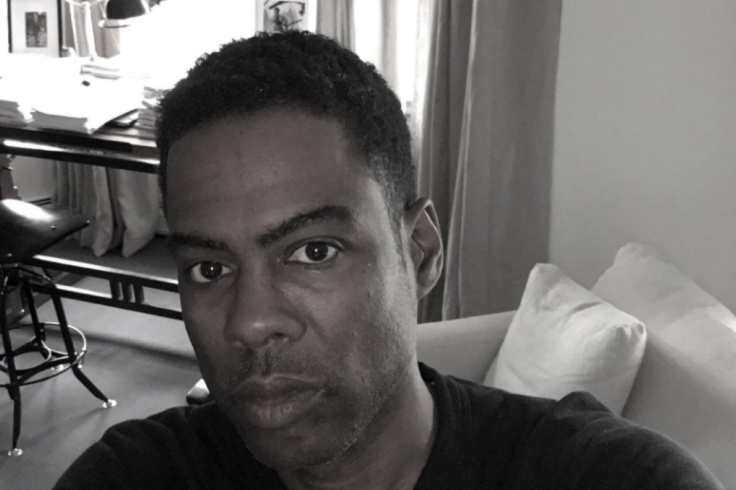
Comedian Chris Rock has opened up about entering therapy during a difficult period in his personal life and continuing treatment as he manages nonverbal learning disorder (NVLD), a condition he was diagnosed with in 2020.
The 61-year-old said in an interview with GQ that he initially sought help because his personal relationships were not where he wanted them to be. He described arriving at therapy deeply upset, adding he 'went in there crying' while trying to understand what was happening in his life.
The comedian also said that therapy remains an ongoing process rather than something that he considers finished and behind him.
Therapy Changed How He Viewed His Behaviour
Rock said that his treatment included conventional therapy alongside separate help for NVLD. He added that learning about the condition led him to reconsider some of his behaviour and recognise that he had sometimes failed to understand how he affected other people.
He also described difficulty recognising social signals in the moment, explaining that he can occasionally understand what someone meant only days later. The comedian first publicly discussed his diagnosis in 2020 after undergoing extensive cognitive testing.
At the time, he said that he previously attributed difficult interactions to the unusual circumstances surrounding fame rather than considering that he might be misreading other people's reactions. He then started intensive therapy and said during the COVID-19 pandemic that he was spending roughly seven hours weekly in treatment.
Rock's latest comments also follow previous discussions about the breakdown of his marriage to Malaak Compton-Rock. He acknowledged problems in his behaviour during the marriage, including infidelity and pornography use, adding that rebuilding his life after the divorce took time.
The comedian said that he is currently working with both a therapist and a specialist who helps him manage NVLD. His latest discussion of treatment comes as he makes a return to directing with 'Misty Green,' a comedy-drama he also wrote, according to a report by People.
He said in his interview with GQ that he plans to continue writing and directing while remaining undecided about when he might produce another stand-up special.
What Is Nonverbal Learning Disorder?
NVLD is a neurodevelopmental condition associated primarily with difficulties processing visual and spatial information. It can also affect people's ability to interpret facial expressions, body language and other social cues, although symptoms vary between individuals. Verbal abilities can remain average or above average, meaning it does not indicate difficulty speaking.
The disorder is not currently recognised as a distinct diagnosis in the Diagnostic and Statistical Manual of Mental Disorders (DSM). Researchers continue to work on establishing clearer diagnostic criteria.
There is a 2025 expert report proposing the name developmental visual-spatial disorder to better reflect its central features. The report was developed by a working group seeking standardised diagnostic criteria that could support consideration of the condition in future editions of the DSM.
How Nonverbal Learning Disorder Can Affect Daily Life
The effects of NVLD can extend beyond social interactions as people with the condition may have difficulty with visual-spatial tasks. These include reading maps, judging distances, coordinating movements, organising complex activities or working with certain types of mathematical information.
A report by Cleveland Clinic noted that difficulties interpreting facial expressions, body language and non-literal language can affect communication and relationships.
Research suggests that the condition does not present in exactly the same way for everyone. A 2026 study involving children referred for learning and neurodevelopmental difficulties found that people meeting NVLD criteria showed varying combinations of visual-spatial, motor coordination, attention, social-communication and other nonverbal difficulties.