
Think E-Scooters Are Safer Than Motorbikes? Study Finds Riders Face 3.5 Times the Risk of Brain Injury
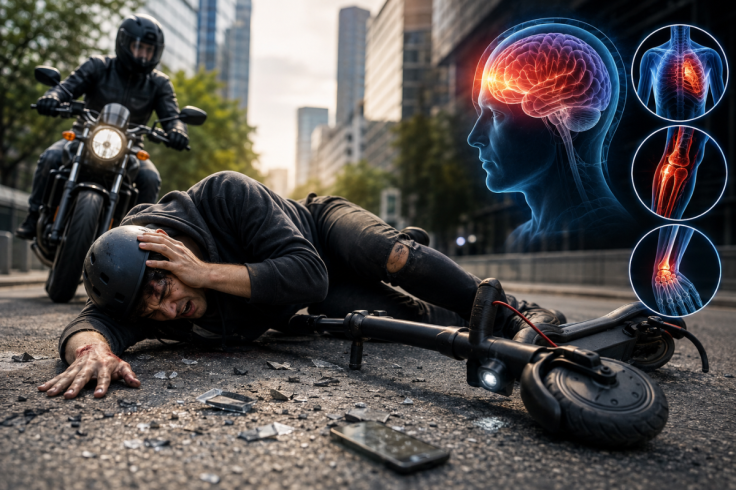
E-scooter riders face 3.5 times the risk of suffering a traumatic brain injury compared to motorcyclists, according to major research led by surgeons at St George's University Hospital in London.
The study, published in the peer-reviewed journal Scientific Reports, analysed data from over 15,000 major trauma patients across England and Wales to reveal severe, hidden collision risks.
While rising fuel prices may prompt many to seek alternative transport, e-scooters offer zero collision protection. Compared to automobiles, riders face extreme physical exposure on public roads.
Risks Facing E-Scooter Riders
Electric scooters have evolved rapidly into a common form of urban mobility across the UK. However, reliable safety data has remained limited until recently.
A team led by surgeon David Bodansky analysed data for 15,247 major trauma patients from 18 cities between 2020 and 2022. The research was published in Scientific Reports.
Adult e-scooter riders faced a 3.5 times higher risk of traumatic brain injury than motorcyclists. They also faced a 1.5 times higher risk of internal organ injury. Furthermore, riders faced a 3.2 times higher risk of vascular injuries. More than one in 10 injured riders were children, who were also more likely to suffer injuries than riders in other groups.
However, fracture risks for e-scooter riders were 20 per cent lower than motorcyclists. They were also 10 per cent lower than pedal cyclists.
Researchers documented helmet use in only 5.9 per cent of e-scooter riders. In contrast, helmet usage stood at 75.7 per cent for motorcyclists and 45.0 per cent for pedal cyclists.
Vehicle design may cause riders to fall head-first over handlebars during collisions. Analysis of 23,193 self-reported incidents have found that women were 2.1 times more likely to report severe injuries.
Researchers suggested this may occur partly because scooters match male body proportions. Women also more frequently ride on unpaved footpaths.
To reduce harm, study authors recommend mandatory helmet laws and stricter speed limits. They also suggest deformable handlebar grips and enhanced braking. The research highlighted that collisions occurred far more frequently within socioeconomically deprived regions.
Pre-Participation Physical Examinations
Alongside vehicle safety regulations, personal health readiness may also play a role in injury prevention. A pre-participation physical examination is an important medical evaluation conducted before starting demanding physical activities.
These physical examinations include a detailed medical history review and vital sign assessments. They also require cardiovascular screening and thorough musculoskeletal checks.
A physician conducts these systematic evaluations to measure basic physical fitness. A specialist uses these checks to detect hidden heart conditions, joint instability, or underlying respiratory issues.
Identifying these hidden health vulnerabilities early prevents severe medical complications during intense physical strain. Detecting previous concussions or unmanaged asthma helps prevent catastrophic health emergencies.
Early detection allows for proper medical management before engaging in hazardous physical movement. Ultimately, these physical examinations play a critical role in injury prevention by establishing baseline health metrics.
A physician can recommend targeted physical interventions or specific protective gear based directly on results. Identifying individual physical risk factors beforehand significantly reduces the overall likelihood of suffering severe body trauma.
This proactive approach ensures participants can engage in sport and active travel as safely as possible.
Currently, rental e-scooters are tested in Government trial schemes across cities like Liverpool, Bristol, Birmingham, and London. However, using privately owned e-scooters on public roads remains strictly illegal across the country.
Department for Transport figures revealed 1,312 e-scooter collisions occurred in 2024, resulting in 1,390 casualties and six fatalities. A Department for Transport spokesperson stated: 'These are concerning findings, and our thoughts are with anyone who has been injured on our roads.'