
Climbers Are Melting Everest's Glacier With Their Urine, New Study Says It's Melting 154 Tonnes of Ice a Year
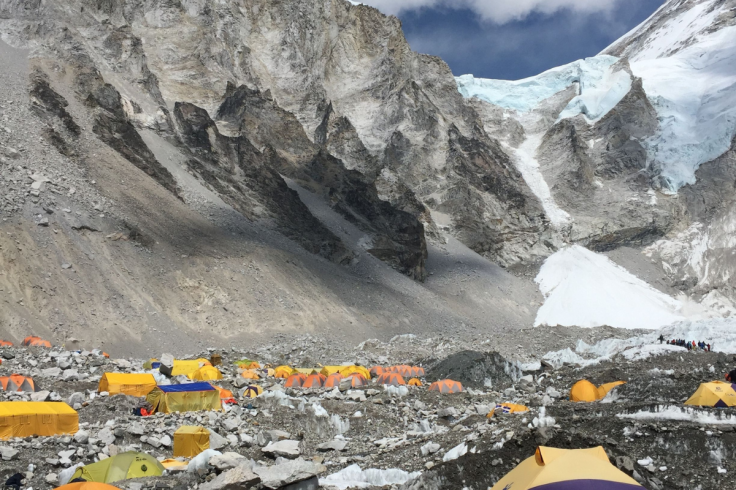
Human urine from climbers and support crews at Mount Everest Base Camp carries enough heat to melt an estimated 154 tonnes of ice and snow during spring, according to research published in July. The study also examines fuel burned to keep the camp running. Climate change remains the main driver of glacier loss.
What the Everest Urine Study Actually Found
Researchers examined human activity at the Nepal-side base camp during the spring 2023 climbing season, using field data on fuel consumption and urinary discharge alongside satellite observations spanning more than three decades. The urine estimate is an energy calculation: it describes how much ice the heat could theoretically melt, not a direct measurement of 154 tonnes of glacier disappearing solely because of urine.
Thousands of climbers, guides and support workers are estimated to produce more than 6,000 litres of urine each day. Much of it is discharged directly onto the glacier, while solid waste collected in toilet systems is carried down the mountain. At high altitude, climbers are encouraged to drink plenty of water to reduce dehydration, increasing the volume of urine produced.
The research team, led by Khim Lal Gautam, also assessed heat released by liquefied petroleum gas, kerosene and petrol used for cooking, heating and electricity. During the roughly 50-day season, about 1,600 tents consumed 824 LPG cylinders, 18,935 litres of kerosene and 5,130 litres of petrol.
Fuel Use Has a Bigger Local Effect
Combining the estimated heat from fuel use and urine, researchers calculated total energy of 849,174 megajoules, equivalent to melting about 2,492 tonnes of ice and snow, with an uncertainty margin of 528 tonnes. Urine is therefore one part of a larger footprint, not the main explanation for the glacier's decline.
Satellite observations showed land-surface temperatures at Everest Base Camp rose by an average of 0.28°C a year between 1991 and 2023.
That rate was roughly twice the warming recorded at the surface of the adjacent Khumbu Glacier. The finding points to unusually rapid local warming, although the temperature trend alone does not establish how much is attributable to human activity.
The calculations excluded other sources of heat, including helicopter flights, climbers' body heat and the animals used to transport supplies. The estimate does not account for every potential source of heat at Base Camp.
Could Everest Base Camp Move off the Glacier?
The study, published in Regional Environmental Change, considers whether the base camp should eventually move to stable ground. Researchers identified two possible sites southwest of the existing camp, which currently sits on the glacier. Relocation would be a major logistical decision, but the paper presents it as an option for reducing pressure on a vulnerable environment.
The study does not suggest urine is responsible for Everest's overall glacier retreat. Global climate change remains a central cause, while the research estimates how local activity adds heat at one heavily used site. The authors say addressing those pressures could help protect the Khumbu Glacier and support mountaineering in the region.
The findings raise broader questions about the environmental cost of operating a base camp on a glacier, including the fuel burned to power thousands of tents and the disposal of human waste.