
NHS Ward Hit 44C as Nurses Reveal Heat Is Worsening Patients' Health and Recovery
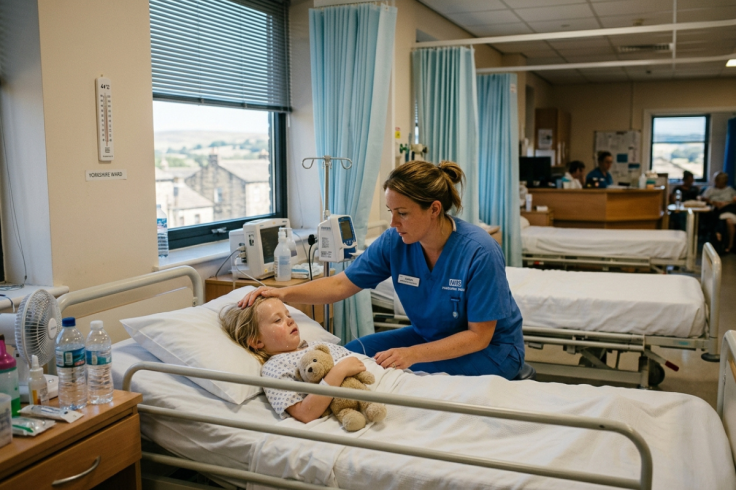
A children's ward in Yorkshire reached a searing 44C during this summer's heat, a nurse told the Royal College of Nursing (RCN), as staff reported patients fainting, becoming dehydrated and suffering worsening health.
The account comes from an RCN survey of 2,471 nursing staff, who reported that extreme heat affected patient care and, in some cases, contributed to deaths.
The RCN said high temperatures affected care and were linked in nurses' accounts to poorer outcomes. Staff reported fainting and dehydration among patients, particularly older people.
The survey ran from 13 to 28 August 2026 and included 2,471 respondents in England and Wales. The RCN excluded fewer than 15 responses from Scotland and Northern Ireland.
Slower Healing, Worse Recovery
A nurse in the South East said high temperatures meant wounds healed more slowly, mobility declined and even resting became a struggle against the heat.
A palliative-care nurse in the South West described a patient with chronic ulcers. The nurse said the wounds festered in the heat, attracted flies and were found to have maggots.
A cancer nurse in London said patients were visibly sweating during chemotherapy in a unit where the air conditioning was not running.
'This feels like a safety concern, not just a comfort issue,' the nurse said.
Vulnerable Patients Hit Hardest
Heart failure and respiratory conditions were a common theme in the survey. Nurses reported that patients with these conditions appeared to fare worse during periods of extreme heat.
A nurse in the East of England described patients with heart failure sitting in temperatures above 30C on a new ward with blocked windows.
A nurse in Wales said extreme heat directly affected the deaths of two frail patients. The nurse stressed that heat was not the only cause.
'If you are in respiratory failure, the heat is a death sentence,' the nurse said.
In a London hospital, a nurse reported increased respiratory distress among newborn babies during extreme heat. Other nurses reported that some mental-health patients became more agitated or aggressive.
Robert Meade, a postdoctoral research fellow in the Department of Epidemiology at Harvard T.H. Chan School of Public Health, said very hot weather can worsen symptoms in people with chronic diseases.
Meade said people with cardiovascular, respiratory, metabolic or neurological conditions can be particularly vulnerable. He added that problems affecting the heart, kidneys or nerves can increase the risk of heat exhaustion or heatstroke.
The World Health Organization (WHO) says heat stress is a leading cause of weather-related deaths. It can worsen cardiovascular disease, diabetes, mental-health conditions and asthma, while heatstroke is a medical emergency.
It also says heat-related mortality among people aged over 65 increased by about 85 per cent between 2000–2004 and 2017–2021. WHO says deaths and hospitalisations triggered by extreme heat can occur rapidly, requiring swift intervention.
Surgical Delays, Official Response
Tim Lane, president of the Royal College of Surgeons of England, said extreme heat and ageing ventilation systems made it harder to keep operating theatres open.
Some 74 per cent of nurses surveyed said they had little or no confidence that the government was taking sufficient measures to reduce the impact of climate change on health and care services.
The Department of Health and Social Care said an initial £32 million would improve cooling and ventilation systems and strengthen hospitals' resilience to extreme heat.
RCN General Secretary and Chief Executive Professor Nicola Ranger said staff were fighting a losing battle in buildings that often lacked even basic cooling facilities.
She warned that without effective cooling by next summer, patients could suffer further harm.