
Jay Rockefeller, Senator Who Helped Millions of Children Get Health Insurance, Dies at 89
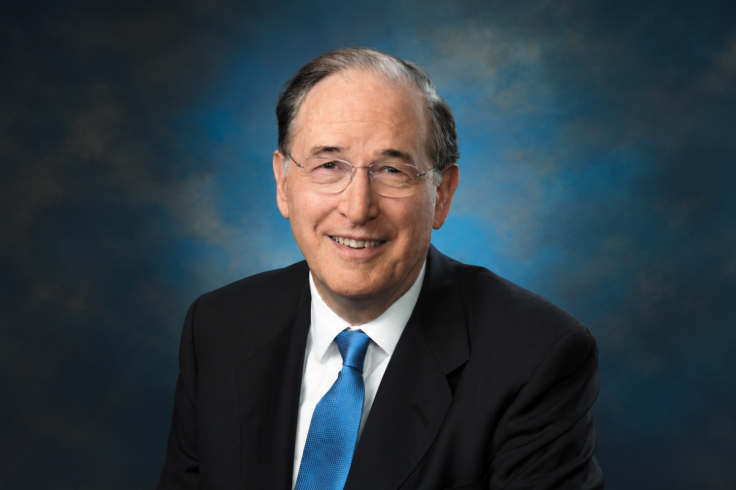
Jay Rockefeller, the senator who helped millions of children gain access to health insurance through the Children's Health Insurance Program (CHIP), died on Thursday night at his home in Washington, officials at public television station WETA said. He was 89.
Established in 1997, the programme was shaped by Rockefeller and other lawmakers, including Senators Ted Kennedy, Orrin Hatch and John Chafee. It enables the federal government and states to provide health coverage to children in families whose incomes are too high to qualify for Medicaid but who cannot afford private insurance.
The programme has provided low-cost health coverage to millions of children whose families might otherwise struggle to afford medical care.
He served in the Senate for 30 years, from 1985 until 2015, when he was succeeded by Republican Shelley Moore Capito. Before that he served two terms as governor of West Virginia.
From Manhattan to a Mining Town
Born John Davison Rockefeller IV in New York City in 1937, he arrived in West Virginia in the mid-1960s, aged 27, as a volunteer with the Volunteers in Service to America (VISTA) anti-poverty programme.
He worked in the mining community of Emmons, a period he said reshaped his politics. He entered state politics as a Democrat, unlike his uncles Nelson and Winthrop, who were Republican governors of New York and Arkansas respectively.
He served in the West Virginia House of Delegates and as secretary of state, lost his first race for governor in 1972, then became president of West Virginia Wesleyan College before winning the governorship in 1976. He was elected to the Senate in 1984, partly funding his early campaigns from his inherited fortune.
Health Reform, Then a Reckoning Over Iraq
Rockefeller supported President Bill Clinton's unsuccessful push for near-universal health coverage in the 1990s and backed President Barack Obama's healthcare overhaul in 2010. He argued, again unsuccessfully, for a government-run insurance option open to the wider public.
In 2002 he voted to authorise military action against Iraq, which was invaded by a US-led coalition in 2003. He later said he regretted his vote. As chairman of the Senate Intelligence Committee, he oversaw a 2008 report that accused senior Bush administration officials of exaggerating intelligence about Iraq's weapons capabilities and its alleged links to al Qaeda.
'Representing to the American people that the two had an operational partnership and posed a single, indistinguishable threat was fundamentally misleading and led the nation to war on false premises,' he said at the time.
Committees, Coal and Car Parts
He chaired the Senate committees on Commerce, Science and Transportation, Veterans' Affairs and Intelligence. He supported consumer protections in telecommunications, pushed for stronger broadband networks and sponsored a bill to stop companies tracking customers' online activity.
Drawing on contacts made while studying in Tokyo, he helped persuade Toyota to build an engine and transmission plant in Buffalo, West Virginia. The factory was announced in 1996 and opened in 1998. On coal, he generally backed the industry but clashed with some executives in 2012 when he resisted Republican moves to block regulation of emissions from coal-fired power stations.
In 2013 he announced he would not seek a sixth Senate term. He is survived by his wife, public broadcasting executive Sharon Percy Rockefeller, and their four children.