
Skin Cancer Vaccine Success Sparks Hope for Lung, Bladder and Pancreatic Cancer Patients
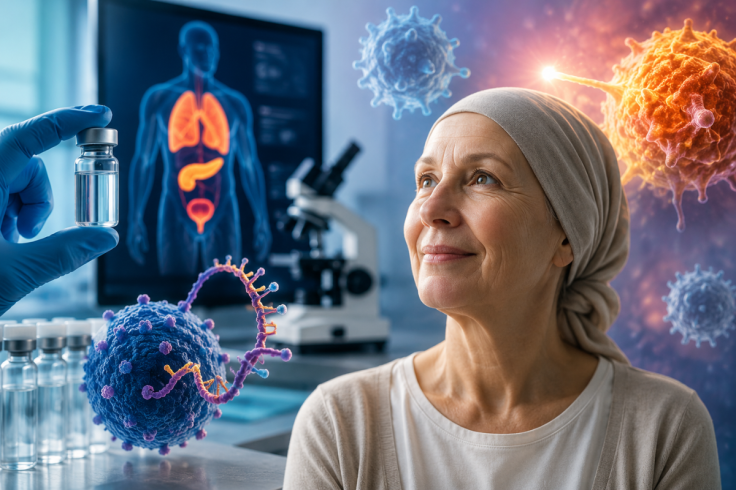
A personalised vaccine has shown early promise in reducing the risk of deadly skin cancer from returning, and scientists say the approach could offer hope for patients with lung, bladder and pancreatic cancer too.
Merck and Moderna announced recently that their vaccine, given alongside the immunotherapy drug Keytruda, reduced the risk of melanoma coming back and spreading in a major trial. More than 1,000 patients took part.
The companies have not yet released full data from the trial, and the results have not been peer-reviewed or published in a medical journal.
Still, for patients facing a high risk of recurrence after surgery, the announcement offers rare hope of a tailored treatment built around their own tumour.
Melanoma Trial Hailed as Breakthrough
Dr Ryan Sullivan, director of the Center for Melanoma at Mass General Brigham Cancer Institute, said the result was significant for the wider field. He said it brings hope that similar approaches could change cancer care.
Dr Julie Gralow, chief medical officer of the American Society of Clinical Oncology, called the trial result a 'monumental leap forward'. She said it validates mRNA technology as a cancer treatment.
Unlike chemotherapy, which affects both healthy and cancerous cells, the vaccine trains the immune system to target mutations found only in a patient's own tumour.
It is made by analysing tissue removed during surgery. Scientists select as many as 34 abnormal proteins, known as neoantigens, created by mutations in the tumour.
An individualised mRNA strand then carries instructions telling the immune system to attack those specific proteins. Patients receive up to nine doses of the vaccine alongside up to nine doses of Keytruda.
Separate five-year data from an earlier, smaller trial, presented in June, showed the combination cut the risk of melanoma returning by 49 per cent. It also reduced the risk of spread by 59 per cent, compared with Keytruda alone.
Lung and Pancreatic Cancer Trials
Beyond melanoma, Merck and Moderna are running large trials in non-small cell lung cancers that have been surgically removed.
They are also testing the combination in mid-stage trials for bladder and kidney cancers. Early-stage trials are under way for pancreatic and stomach cancers, Moderna president Stephen Hoge told Reuters.
Roche and BioNTech are separately testing a similar treatment, called autogene cevumeran. It is being trialled in colon and pancreatic cancer patients who have had surgery. Results from the colon cancer trial are expected in 2027, with pancreatic results to follow in 2031.
Professor Peter Johnson, national clinical director for cancer at NHS England, said most cancer immune treatments work by activating the immune system generally. This new treatment directs it 'very specifically', he told the BBC's Today programme.
He called it an important advance. Dr Talisia Quallo, of Cancer Research UK, said the result 'shows promise' but stressed that the interim data still needed to be fully reviewed.
Dr Pauline Funchain, an oncologist at the Stanford Cancer Institute, said the vaccine also aims to build immune memory. This could help the body recognise and attack melanoma cells left behind or that reappear later.
She noted it is not yet known whether the approach helps people live longer. Dr Jeffrey Ishizuka, of Yale Medicine, said the trial's success 'represents a true breakthrough' for the field.
Merck and Moderna plan to discuss the results with regulators, though no timeline for approval has been announced.
Hoge said the treatment's breakthrough therapy designation could see it made available as soon as next year, if regulators approve it.