
Pope Leo Breaks Silence on Lung Cancer Surgery With Stark Warning About Healthcare Inequality
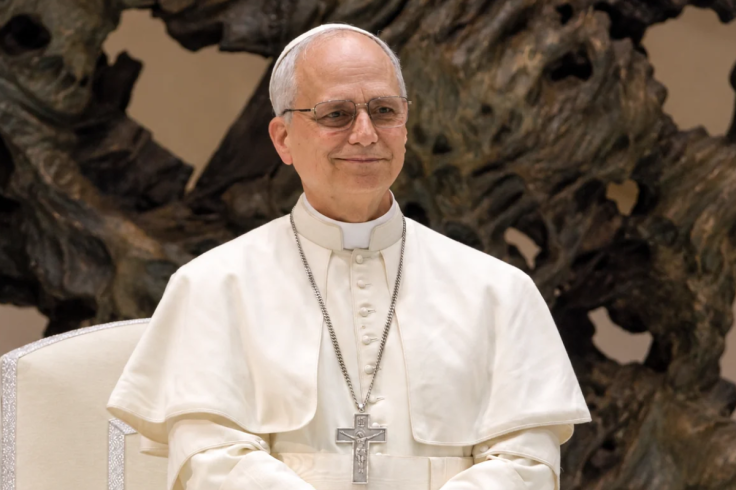
Pope Leo XIV used his first major address since undergoing lung cancer surgery to warn starkly about healthcare inequality, telling Uruguay's leaders in Montevideo that his own survival had deepened his concern for those who cannot afford treatment.
Speaking in the Uruguayan capital on Friday, the 71-year-old said: 'Ensuring that healthcare is accessible to everyone, regardless of their resources, is a duty that confronts every society.'
He was addressing President Yamandú Orsi, government officials and diplomats at a welcome ceremony in Plaza Independencia. It marked the start of a 12-day tour of Uruguay, Argentina and Peru, the longest and farthest trip of his pontificate and his first major overseas visit since the operation.
'Recently I experienced first-hand the limitations imposed by illness and I received care for which I am deeply grateful,' he said. 'That experience makes me think of the many men and women who lack the means to obtain a timely diagnosis or receive the treatments they need.'
He warned against valuing people by their productivity or wealth, arguing that those weakened by sickness or disability need assistance and support. He also said wealth and private enterprise should deliver benefits that reach everyone.
Surgery and Recovery After Lung Cancer
The Pope disclosed on 11 October that doctors had found a lung nodule at a very early stage. He underwent surgery on 13 October at Rome's Gemelli Hospital, where surgeons removed the lower lobe of his right lung. He was diagnosed with lung adenocarcinoma, the most common form of lung cancer, and spent four days in hospital.
The Vatican has said the disease was localised and that he needs no further treatment. Doctors cleared him to travel after a two-week convalescence period.
Speaking to journalists on the flight from Rome, the Pope said he felt 'in fairly good shape' and had never doubted the trip would go ahead. He said the experience had reaffirmed his belief in healthcare as a human right.
Pope Leo's Message to a Secular Uruguay
Uruguay's mixed public-private health system is widely regarded as one of the most robust in Latin America. The country is also one of the continent's most secular, with about 35 per cent of its 3.5 million people identifying as Catholic.
The visit is the first by a pope since St John Paul II travelled there in 1988. Uruguayan authorities said about 30,000 people filled the square and lined nearby streets.
The Pope also defended unborn children and called for life to be protected until its natural end. Uruguay legalised abortion in 2012 and, more recently, euthanasia.
He further said technology, including artificial intelligence, must serve workers rather than replace them, and that the way markets are organised has a direct impact on people's ability to shape their futures.
Against this backdrop, his appeal for universal healthcare and protection of the most vulnerable was framed as a test of how a modern, secular democracy balances individual freedoms with its responsibilities to those who are sick, poor or at the end of life.
The Pope travels to Argentina on Sunday, then to Peru, where he holds citizenship and spent two decades as a missionary and bishop. The tour ends on 17 November.