
Man Develops Creepy Condition After Brain Surgery, Sees His Cat's Eyes on People's Faces
A 28-year-old man has developed a rare neurological condition following brain surgery that causes him to see his cat's eyes on other people's faces.
The man, identified only as Karl, began experiencing the unusual visual distortions after undergoing surgery to remove part of his right temporal lobe to treat an arteriovenous malformation, an abnormal tangle of blood vessels that can increase the risk of brain bleeding.
Researchers from Dartmouth College and Brigham and Women's Hospital documented his experience in a case report published in the journal Cortex.
What Is Prosopometamorphopsia? The Rare Condition Behind His Distorted Vision
Karl experiences facial distortions known as prosopometamorphopsia (PMO), driven in his case by a form of palinopsia, in which previously seen visual features persist or reappear in subsequent perceptions.
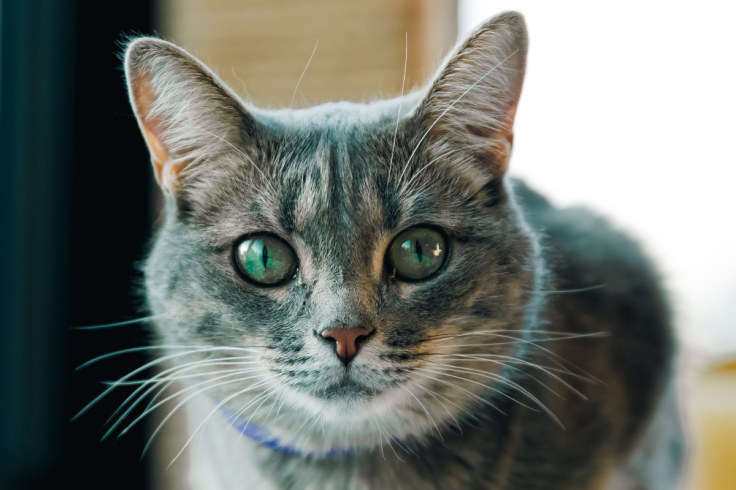
In his case, the distortions involve the eyes of people and his grey tabby cat, Luna. Because Luna is often the first face he sees in the morning, her almond-shaped eye sockets, enlarged pupils and distinctive markings can appear on human faces throughout the day.
The reverse can also happen. If Karl sees a person's face first, he may subsequently notice that individual's eye shape and pupils appearing on other people and even on Luna.
According to lead researcher Brad Duchaine, a professor of psychological and brain sciences at Dartmouth, the episodes can last several hours and sometimes continue throughout the day.
PMO is exceptionally rare. Duchaine's laboratory has heard from more than 250 people experiencing facial distortions, although fewer than 100 cases have been documented in medical literature.
What Is Palinopsia and Why Does It Affect Facial Recognition?
Karl's facial distortions are linked to a visual symptom called palinopsia, which occurs when something previously seen continues to appear in a person's vision or influences what they see later.
According to the Cleveland Clinic, palinopsia happens because of disruptions or unusual activity in the brain regions responsible for processing visual information, rather than problems with the eyes themselves.
The symptom can involve lingering images, objects appearing repeatedly or visual features being carried over into other things a person sees.
In Karl's case, previously viewed facial features become incorporated into other faces. Researchers believe the condition reflects an unusual interaction between visual memory and facial recognition.
The right temporal lobe plays an important role in processing faces. Its partial removal during Karl's surgery may have contributed to the disruption, although the case report does not establish a definitive mechanism.
Why Brain Surgery May Have Changed How He Sees Faces
The researchers suggested that Karl's experience demonstrates how individual facial features retrieved from memory can influence the brain's ongoing perception of faces.
Karl's experience suggests that this process can malfunction, allowing previously stored facial characteristics to become attached to other faces.
The researchers compared his condition with a case documented in a 1986 study involving a woman who reportedly saw a poodle's face on other passengers while riding a bus. She had previously experienced a stroke.
However, Karl's case is different because individual facial features, rather than entire faces, appear to transfer between people and animals.
AI Helps Scientists Recreate His Unusual Visual Experiences
The research team also used artificial intelligence to create more realistic illustrations of Karl's visual distortions.
Duchaine initially prepared sketches based on Karl's descriptions before using a generative AI model to produce photorealistic images. He then worked directly with Karl to refine the illustrations until they accurately represented what he experienced.
The researchers said the approach could help clinicians and scientists better understand unusual visual disorders while allowing patients to communicate their experiences more clearly.