Can a Vaccine Prevent Dementia? Why Scientists Are Excited by the Shingles Jab Discovery
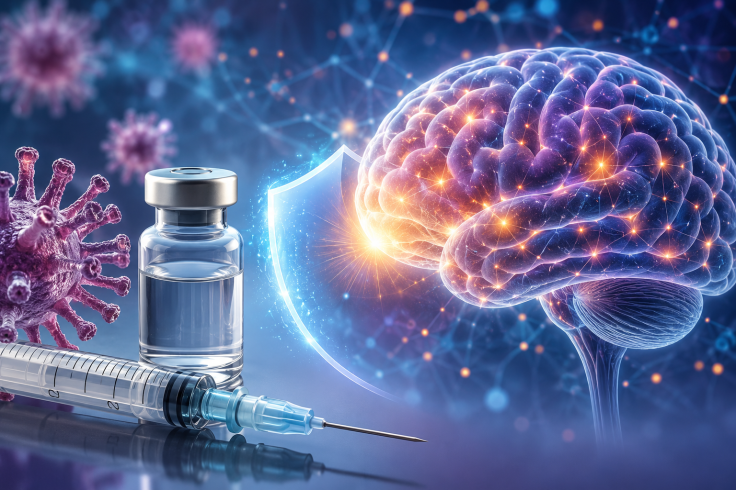
A vaccine already given to older adults may do something nobody planned for. Records from Wales suggest people who received the shingles jab were far less likely to develop dementia.
What excites scientists is not just the finding but how it was found. The evidence came from an accident of policy, not a drug trial.
Global estimates put those with dementia in the tens of millions, a figure rising as populations age. Researchers say existing treatments do little once symptoms take hold.
A Fortunate Rollout in Wales
Wales began offering the shingles vaccine on 1 September 2013. It went to anyone who was 79 on that date, with each age group eligible for a year.
People who had already turned 80 missed out for good. That cut-off created what scientists call a 'natural experiment'.
Eligibility hung on a birth date, not personal choice. A US university research team said that came about as close to a randomised trial as possible.
The team combed through hundreds of thousands of health records. They compared people who turned 80 just before the cut-off with those who turned 80 just after.
Why the Dementia Signal Stands Out
The analysis found that people who received the vaccine were less likely to develop dementia in later years. The two groups matched in every other respect the team checked.
Education levels were the same, as were rates of diabetes, heart disease and cancer. The team says the protective signal held whichever way the data was cut.
The records also showed vaccinated people were less likely to be diagnosed with mild cognitive impairment. That is the stage where memory and thinking slip, but daily independence remains.
The part researchers find most exciting involves people who already had dementia when the rollout began. Those vaccinated after diagnosis were far less likely to die from the disease.
That suggests the jab may slow dementia as well as delay it. The effect was stronger in women, a difference the team says may reflect immune response or how dementia develops.
The pattern has since appeared in records from England, Australia, New Zealand and Canada. Researchers say the signal keeps repeating across datasets.
How the Vaccine May Work
Nobody is certain how a shingles jab might protect the brain. A hospital neurologist specialising in cognitive disorders says many researchers point to inflammation, which is linked to cognitive decline.
He raises a second possibility. The virus behind shingles lies dormant in the nervous system for life, and the jab may stop it reactivating.
A university researcher offers a broader explanation, known as 'trained immunity'. Vaccines may reset immune cells so they handle later threats better, while calming inflammation across the body.
That would explain why other jabs show similar links. Flu vaccines and the tuberculosis jab have both been tied to lower dementia risk in separate studies.
One screening study tested hundreds of existing medicines against dementia risk. Only a handful lowered it, and every one of them was a vaccine.
Researchers describe the appeal in simple terms. The jab is cheap, safe, readily available and easy to scale worldwide, they say.
They add that delaying the onset of Alzheimer's disease by even a few months would bring huge savings for society. One caution remains, however.
The Welsh programme used an older vaccine, made with a weakened form of the virus. The team says it is not yet known whether the newer one has the same effect.
Researchers are now seeking funding for a full randomised trial. Only that, they say, would settle whether the link is cause and effect.
Frequently Asked Questions
- What is the significance of the shingles vaccine in relation to dementia?The shingles vaccine may reduce the risk of developing dementia, as suggested by records from Wales and other countries.
- How was the link between the shingles vaccine and dementia discovered?The link was discovered through a 'natural experiment' in Wales, where eligibility for the vaccine was based on birth date, allowing researchers to compare health outcomes.
- Why might the shingles vaccine protect against dementia?The vaccine may reduce inflammation or prevent the reactivation of the virus, both of which are linked to cognitive decline.
- What are the implications of this finding for public health?If the link is confirmed, the shingles vaccine could be a cost-effective, scalable method to delay the onset of dementia, providing significant societal benefits.