
Why Measles Can Be Deadly: The Hidden Dangers of a Virus Many People Think Is Just a Childhood Illness
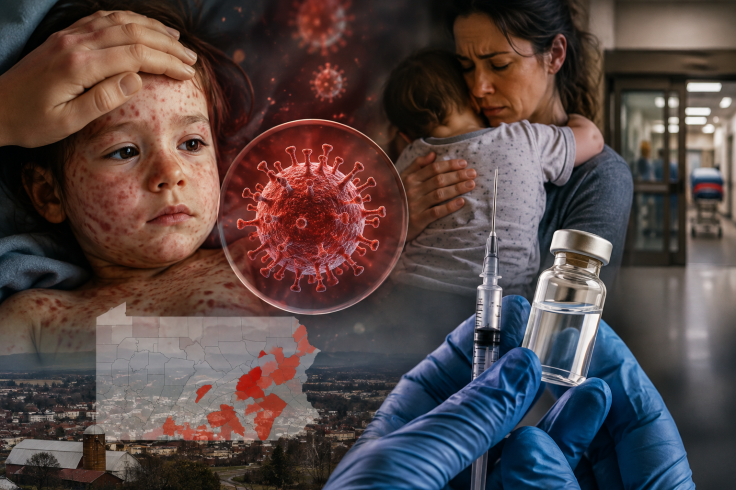
Pennsylvania has reported two measles-associated deaths, the first US deaths related to the disease reported in 2026.
Both individuals were unvaccinated residents of Lancaster County. They are also the first deaths related to measles in Pennsylvania in 35 years.
The deaths come as Pennsylvania's outbreak approaches 400 cases, with 393 infections confirmed across 28 counties in 2026.
The cases highlight why measles is far more than a childhood rash. The highly contagious virus can cause serious health problems, including pneumonia and brain swelling, and can be fatal.
Not Just a Rash
Measles symptoms can begin seven to 21 days after exposure. Early signs include a high fever, cough, runny nose and red, watery eyes.
Koplik's spots, or red spots with white centres inside the mouth, can appear two to three days later. The rash follows a few days after the initial symptoms.
The rash usually starts on the face or head before spreading downwards across the neck, chest, back, arms, legs and feet.
But the familiar rash is only one part of the illness. Measles can lead to complications ranging from serious illness to life-threatening conditions.
Pneumonia is one of the serious complications of measles and can be life-threatening. Brain swelling, known as encephalitis, can also be life-threatening.
Measles can also make people more likely to become sick with other infections. In very rare cases, subacute sclerosing panencephalitis, or SSPE, can develop years after a measles infection.
SSPE is a rare but fatal nervous system infection. Other complications can include blindness, ear infections, dehydration, bronchitis and laryngitis.
Measles can also pose particular risks during pregnancy. A baby could be born prematurely or have low birth weight if the mother develops measles.
People at higher risk of severe complications include children younger than five, adults over 20, pregnant women and those with weakened immune systems.
There is no cure or specific treatment for measles. Death related to measles is rare but remains possible, occurring in roughly one to three patients per 1,000 cases.
'People have forgotten how serious it can be, especially for the very young, the pregnant and the very old,' Pennsylvania Secretary of Health Dr Debra Bogen said.
A Deadly Example in Pennsylvania
The Pennsylvania outbreak shows that the risk of serious illness is not simply theoretical. About 20 per cent of cases in the state this year have required hospital treatment.
None of the measles cases confirmed by the health department have been in people who received both recommended doses of the MMR vaccine.
Two doses of the MMR vaccine are 97 per cent effective against measles. Pennsylvania health officials are recommending early or catch-up MMR doses for people as young as six months who are not fully protected.
The CDC said it is working with state and local health departments to strengthen response efforts, support affected communities and communicate steps people can take to slow the spread of measles.
The outbreak comes as measles continues its resurgence across the US. More than 2,700 cases have been recorded this year, more than in any year since 1991.
Measles was declared eliminated in the US in 2000. Experts expect the country will soon lose that elimination status as transmission continues.
The virus spreads when an infected person breathes, coughs or sneezes. It can remain infectious in the air and on surfaces for up to two hours after an infected person leaves an area.
The two Pennsylvania deaths underscore the danger behind a disease often associated with a childhood rash. Measles can cause severe complications, leave people vulnerable to other infections and, in rare cases, prove fatal.