
Xylitol Warning: Why Scientists Are Investigating a Common Jam and Gum Sweetener's Heart and Stroke Risks
People with the highest blood levels of the sweetener xylitol were 57% more likely to die or suffer a heart attack or stroke within six years. The finding was presented at the European Society of Cardiology (ESC) congress in Munich.
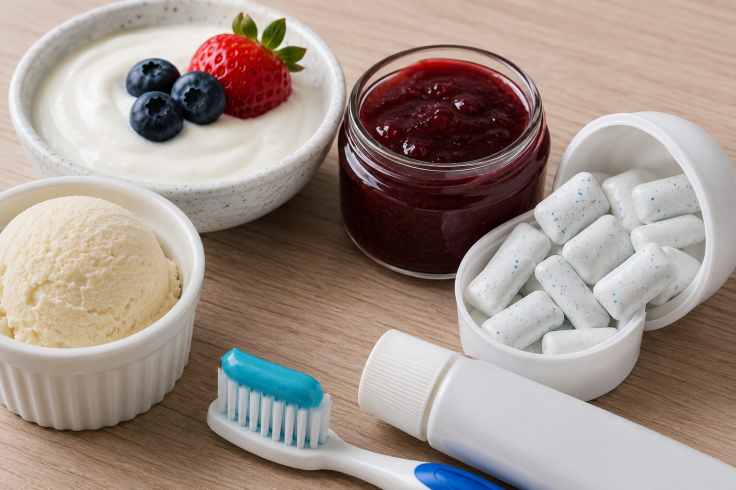
Xylitol is found in chewing gum, toothpaste, jam, yoghurt and ice cream. The ESC said it is added to foods and oral care products at levels often 1,000 times higher than natural amounts.
Dietary guidelines recommend low-calorie sweeteners for people with obesity and diabetes, the National Institutes of Health said. Yet the ESC said its long-term impact on heart risk has not been widely studied.
Researchers keep returning to sugar alcohols, the class xylitol belongs to. A Cleveland Clinic team has already linked another, erythritol, to heart attacks and strokes.
What the New Study Found
The study was led by Dr Marco Witkowski of the Charité University Hospital in Berlin. His team examined 17,710 people in the Canadian Longitudinal Study on Aging and the European Prospective Investigation into Cancer (EPIC)-Norfolk.
Both are observational studies, which show a link but cannot prove cause. Researchers compared the quarter with the highest blood xylitol against the lowest.
The six-year figure came from the Canadian cohort, the ESC said. The gap survived adjustment for age, sex, smoking, lipids, diabetes and hypertension.
In EPIC-Norfolk, followed for 30 years, the risk was 18% higher in the top quarter. Both cohorts pointed to a dose-dependent link: the higher the blood levels, the higher the event rate.
The rise appeared regardless of age and sex, the ESC said. It was also independent of body mass index, hypertension, diabetes and lipid levels.
Why Blood Clotting Matters
Platelets are the blood components that help blood to clot. An earlier Cleveland Clinic study in the European Heart Journal found xylitol made them more sensitive to clotting signals.
That study, led by Dr Stanley Hazen, examined more than 2,000 people. The NIH said the top third were about 50% more likely than the bottom third to have heart events over three years.
Raising blood xylitol sped up clot formation and artery blockage in mice, the NIH said. In 10 healthy volunteers, levels rose 1,000-fold within 30 minutes of drinking a xylitol-sweetened drink.
Levels returned to baseline after four to six hours, and platelets grew more clot-prone while they stayed high. Hazen said there was an 'immediate need for investigating sugar alcohols and artificial sweeteners'.
What It Means for Shoppers
Prof Dan Atar of the ESC communication committee, who was not involved, said causes are hard to infer from such work. He said further studies are needed.
Dell Stanford, senior dietitian at the British Heart Foundation, said the results were not a reason to return to sugar. Free sugar intake still needs to come down, Stanford said.
People may assume sweeteners are healthier and consume more than they realise, Stanford added. The advice was to cut back on processed foods high in sugar, salt or sweeteners.
Hazen said the results did not mean throwing out toothpaste containing xylitol. But products with high levels could raise the risk of clot-related events, he said.
Healthline notes xylitol barely affects blood sugar and insulin, and starves the mouth bacteria behind plaque and decay. Whether it harms the heart needs more research, it says.
Witkowski said the findings highlight 'how little we know about the cardiovascular safety of xylitol'. He said further studies are warranted as amounts in products keep rising.