
Powerlifter Attempted a Bench Press Weighing About as Much as an Adult Cow and Tore Biceps and Thumb Ligaments
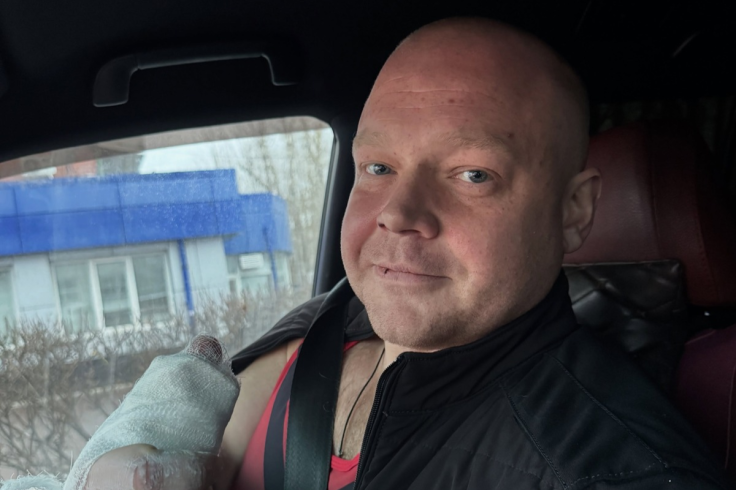
A 605kg barbell crashed onto the chest of Russian powerlifter Alexander Kostyanov, leaving him with a torn biceps tendon, a dislocated thumb with ligament damage and a chest haematoma. The bar weighed about 1,334lb, roughly the same as an adult cow.
Spotters rushed to lift the weight clear at the Yermak Cup 11 in Tyumen, Russia. It was later revealed that he also suffered a dislocated thumb and a chest haematoma.
Earlier at the event, Kostyanov successfully bench-pressed 555kg, a world record recognised by his powerlifting federation. Now the father of three, with a fourth child on the way, has signalled he will retire.
Injuries and a Failed Lift
Kostyanov said he had lifted the weight, and more, in training and was 100 per cent physically prepared. He said his nervous system had failed him again, with adrenaline and overload preventing months of hard work from paying off.
The 555kg and 605kg lifts were 50kg apart, though it was not stated whether they were consecutive attempts. The 50kg increase was a substantial jump between attempts, although the available reports do not establish that it caused the failed lift.
It does not address Kostyanov's failed lift.
Doctor's Verdict on His Joints
Kostyanov said a doctor had shown him recent X-rays of his right hand and identified severe joint degeneration, advanced arthrosis and the effects of long-standing injuries. A surgeon said the breakdowns would become more frequent.
He warned the consequences would be irreversible. Kostyanov said he heard it, understood it and accepted it, concluding that his limit had been set at 555kg.
His family needs a living, mobile husband and father, he said, voicing fears of ending up in a wheelchair. Protecting his long-term mobility now outweighs the lure of further record attempts.
What Research Says About Risks
A systematic review of reports published between January 2015 and February 2024 found powerlifting injury incidence of 1.0 to 4.4 injuries per 1,000 hours of training. The most common sites were the lower back and pelvis, shoulder, and elbow and upper arm.
Prevalence was high when injury was defined as a painful condition that impairs training or competition. Incidence in powerlifting itself was low.
Earlier research by Siewe and colleagues in 2011 collected questionnaire data from 245 competitive and elite powerlifters recruited through 97 clubs. The researchers calculated an injury rate of approximately one per 1,000 hours of training. Many were not serious enough to disrupt training, a rate considered low compared with other sports.
Biceps Tears and Recovery Odds
A separate review of distal biceps tendon ruptures said such injuries typically follow an eccentric load applied while the elbow is flexed and the forearm supinated. A complete rupture can limit upper limb function.
Surgical repair is strongly recommended for athletes. After non-operative treatment of a complete rupture, one study reported a 40 per cent loss of supination strength and a 30 per cent loss of flexion strength.
Among National Football League players, 84 to 94 per cent returned to play at least one game after distal biceps repair, with performance matching control groups. The type of tear Kostyanov suffered and any treatment plans were not stated.
Records in Perspective
Jimmy Kolb of the United States holds the equipped bench press record, having lifted 659kg (1,453lb) in 2025. Guinness World Records lists Blaine Sumner's 401.5kg lift in March 2016 as the heaviest bench press in its record category.
Kostyanov's 555kg lift was recognised at federation level. Now his attention turns from the platform to protecting his joints.
The surgeon's warning of irreversible consequences, together with the arthrosis on his X-rays, has settled his sporting future. Kostyanov said it simply was not meant to be.