
3D-Printed Meat Is on Us Grocery Shelves, Doctors Weigh in on What It Means for Your Health
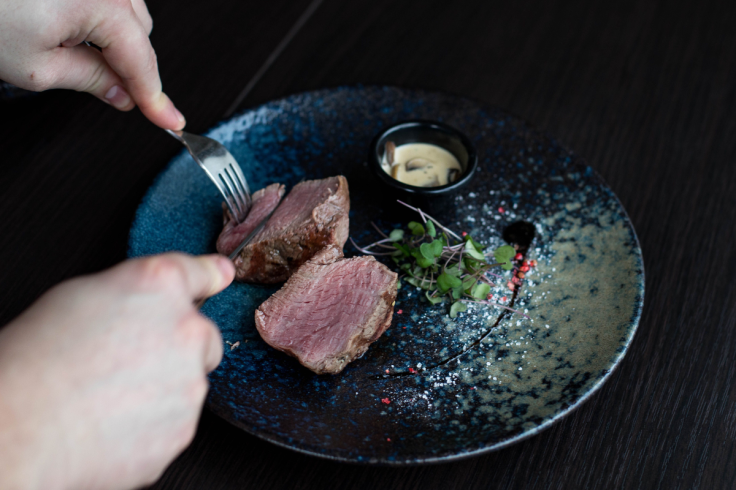
3D-printed meat made from cultivated animal cells has reached US grocery shelves, but the available evidence does not show it is automatically healthier than conventional meat. 'A printer cannot make an unhealthy formulation healthy,' said Dr Saravanan Thangarajan.
Thangarajan, a clinician-scientist and global-health strategist, serves on expert advisory committees of the World Health Organization, Wellcome Trust and UN Office for Disaster Risk Reduction. His work includes evaluating emerging health technologies.
Printer Is Only the Method
'3D-printed meat' sounds like one category, but it is not, Dr Thangarajan said. The printer is only the production method, and what matters for health is what is printed: plant proteins, conventional meat, cultivated cells, fats, binders or other components.
Nutritional quality comes down to the finished food: its protein quality, fat composition, micronutrients, additives and how heavily it is processed. A product does not become healthier simply because it is technologically advanced.
What One Study Found
A 2024 study of one cultivated product found lower levels of protein and most indispensable amino acids than in its conventional counterpart. The same product had higher total fat, saturated fatty acids and cholesterol, the researchers found.
They stressed that the findings came from a single product and should not be extrapolated to the entire sector. That caveat echoes Dr Thangarajan's point that each product must be judged on its own formulation.
@exposrapp ⚠️Scanned on Exposr ⚠️ A printer in a factory produces half a ton of "steak" every hour. No rancher. No feedlot. No animal. Steakholder Foods launched 3D-printed filet mignon, marbled steak, chicken breast, salmon patties, and whitefish patties on US grocery shelves last month. Plant proteins are blended into a paste, loaded into a printer, and extruded in structured layers designed to mimic the muscle fibre, marbling, and fat distribution of real meat. The output looks like a steak. It cooks like a steak. It sits in the same refrigerated aisle as a steak.
♬ original sound - EXPOSR App
Gut Health and Halo Effects
The same caution applies to gut health, Dr Thangarajan said. There is no single '3D-printed meat effect' on digestion or the microbiome. Two products can look almost identical yet differ sharply in nutrition because their ingredients and processing differ.
Claims about digestion therefore need evidence specific to each product. He also urged wariness of a 'technology halo', the assumption that something innovative or potentially more sustainable must also be better for health.
Safety Promise Meets Scale
Some experts see a safety upside. Dana Hunnes, a clinical registered dietitian at Ronald Reagan UCLA Medical Center, sees potential to reduce contamination and foodborne illness.
Dr Uma Valeti, chief executive of UPSIDE Foods, said cultivated meat may cut exposure to E. coli and Salmonella. Dr Thangarajan said the more important question is whether manufacturers can produce the same safe product consistently, at scale.
That means controlling contamination, ingredient quality, storage, traceability and variation from one production batch to the next. Scaling production remains a challenge for the industry.
Questions for Regulators
From a public-health perspective, Dr Thangarajan said regulators should ask very practical questions. What is in the product? How consistently can it be made? Where can hazards enter the process? Which health claims are actually supported?
They should also ask what is known about people eating the product regularly over time. On that last point, doctors and dietitians say the evidence remains limited.
His perspective centres on safety, regulation, evidence and what would be required before novel foods could be recommended at population level. Printing technology, he said, does not change those requirements.
What Shoppers Should Weigh
The health impact of each product depends on how it is made, formulated and consumed. Shoppers may need to assess individual products, including protein quality, fat composition, additives and processing, rather than assume a newer method means a healthier choice.
'The real test is not whether we can print meat,' Dr Thangarajan said, but whether the result is safer, nutritionally sound, affordable and 'meaningfully better than what it replaces'. The available evidence does not yet show that it is.