
Experts Warn Seniors Against Tesla FSD After Musk Shares Video of 98-Year-Old Driver Not Watching Road
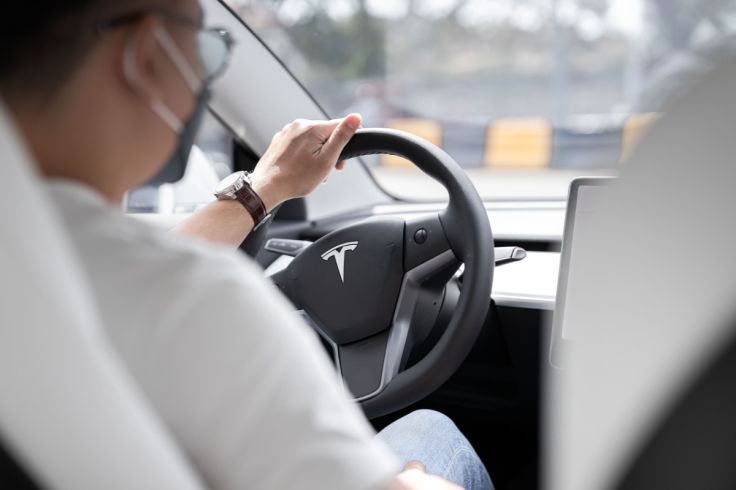
Experts have warned older drivers not to treat Tesla's Full Self-Driving (Supervised) system as autonomous after Elon Musk shared a video of a 98-year-old owner saying he did not look while the car crossed an intersection.
Musk reposted the video in September with a heart emoji. The driver, identified as Larry from Farmington, New Mexico, says: 'Look, I didn't have to look, you know! I don't want to look, it's just doing it.' He also said he trusted the system completely. Tesla's instructions say drivers must remain attentive and be ready to take control.
FSD is a driver-assistance system that can steer, brake and change lanes. Drivers are required to monitor the road and intervene when necessary.
Tesla FSD Still Requires Drivers To Take Control
Tesla's Full Self-Driving (Supervised) system is classified as a Level 2 driver-assistance system, like Ford's BlueCruise and General Motors' Super Cruise. SAE International says drivers remain responsible for the vehicle when these features are engaged, even if their hands are off the wheel and feet are off the pedals.
Tesla's manual tells drivers to 'remain attentive and be ready to take over at all times.' The company offers FSD in the US by subscription for $99 (£78) a month. California regulators required Tesla to add '(Supervised)' to the feature's name in February after action over its marketing.
Birsen Donmez, an engineering professor at the University of Toronto, said the words 'full self-driving' could still mislead consumers. 'If you can't drive yourself, you shouldn't be driving with FSD,' she said. Tesla did not respond to a request for comment.
In July, Tesla shared a video about Lois, a 93-year-old who had felt tired during daily drives before getting a Tesla. Elon Musk reposted the video, saying: 'Tesla self-driving enables safer mobility for senior citizens.'
Johnathon Ehsani, an associate professor at the Johns Hopkins Bloomberg School of Public Health, said Lois' reported tiredness raised questions about whether she could remain alert while using the system. 'Her feeling tired is a bit of a red flag,' he said. 'She may not be awake while this [Tesla] is in operation.'
Limited Evidence on Tesla FSD and Older Drivers
Independent evidence on how Tesla's Full Self-Driving system performs for older drivers is limited. Tesla says its vehicles are less likely to crash when the system is in use, but University of Toronto engineering professor Birsen Donmez said the claim is based on the company's own analysis.
Joseph Young, a spokesperson for the Insurance Institute for Highway Safety, said features such as automatic emergency braking can reduce collisions. Whether combining multiple features in a system such as FSD provides additional safety benefits remains unclear, he said.
Johnathon Ehsani, an associate professor at the Johns Hopkins Bloomberg School of Public Health, said little is known about how older people use driver-assistance systems. 'The extent to which people are willing to adopt these vehicles, and ways that they're using them are completely wide open,' he said. 'We know nothing.'
Ageing can affect reaction time, neck movement and the ability to check blind spots, even without cognitive decline. Surveys indicate that three in 10 Americans with dementia continue to drive. Research at Columbia University found that older adults experienced faster declines in cognitive function and physical health after they stopped driving.
A recent California crash involving a 91-year-old Tesla driver killed one person and injured five at a Trader Joe's car park. It is unclear whether FSD was in use. Research cited by experts suggests older drivers may need more time to respond when a Level 2 system makes a mistake.
FSD requires drivers to monitor the road and be ready to take control. The available evidence does not establish how safely older people can use the system.