
Kratom Addiction Warning as Woman Reveals How Supplement Use Left Her Too Weak to Shower
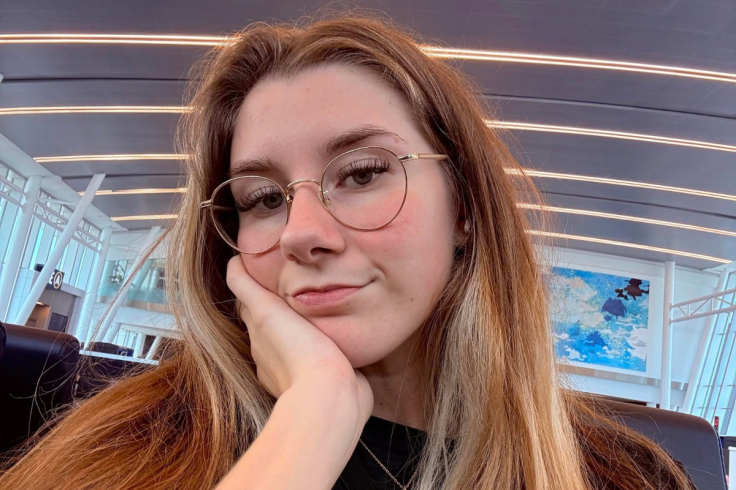
Hilary Tesluck lost nearly 40lbs and struggled to stand in the shower 'because my body was so wasted away' during a kratom addiction that began with four capsules. The 30-year-old from Michigan now urges others to spot the warning signs.
Her warning comes as kratom-related reports to US poison centres rose about 1,200 per cent from 2015 to 2025, from 258 to a record 3,434, according to the Centers for Disease Control and Prevention (CDC). Its report called kratom a public health concern.
From Four Capsules to 100
Tesluck first tried leaf kratom capsules in 2017, aged 21. A friend who knew she had anxiety and took prescription medication introduced her to them, and she wanted something more 'holistic and natural', she said.
She recalled no dosing guidance on the label and took four capsules on her friend's advice. She first felt a boost in energy, confidence and productivity.
The Mayo Clinic says kratom has not been shown to be safe, and the active ingredient in its leaves varies greatly. That makes the effects of a given dose hard to know, it says.
Her intake crept upward. 'Very slowly, over time, I had to take just one more capsule or just one more dose, and then went all the way up to 100,' she said.
Her health and work suffered. She was written up for performance, lost her appetite and hair, and felt 'kind of like a zombie shell of myself overall'.
Cutting back made her feel 'even worse and sicker', she recalled, leaving her 'stuck at that baseline with kratom'. Believing kratom was natural and legal made the dependence hard to accept.
Treatment Setbacks and Relapses
Tesluck first sought treatment in 2020 but felt dismissed. She said a urine test did not detect her use and staff were confused, so she left after a few days and resumed use.
An online recovery meeting in 2021 helped. She relapsed in 2023 after her grandmother's death, then with 7-OH, which she called 'very strong', before getting clean with her recovery group.
7-OH, short for 7-hydroxymitragynine, is present in trace amounts in some kratom leaf material. However, newer high-potency products can contain concentrated or semisynthetic forms of the compound at much higher levels. The body also converts some of kratom's main active compound, mitragynine, into 7-OH.
The US Food and Drug Administration says both compounds act on opioid receptors and can contribute to dependence. Tesluck calls leaf kratom and 7-OH 'one problem at two strengths'.
Mac Haddow, senior fellow on public policy at the American Kratom Association, disputed that view. He said the body's conversion of mitragynine does not produce exposure equal to concentrated products.
He also raised the possibility that her first capsules contained ingredients beyond leaf kratom. He acknowledged that 'kratom can cause physical dependence'.
What Poison Centre Data Show
The CDC report analysed National Poison Data System data and counted 14,449 kratom exposure reports from 2015 to 2025. It said the 2025 surge coincided with high-potency products such as 7-OH emerging.
Multiple-substance exposures carried the most severe outcomes, with 60 per cent having serious medical outcomes in 2025 and about half requiring hospitalisation. Across the study period, they accounted for 184 of 233 kratom-associated deaths.
Alcohol, opioids, benzodiazepines and antidepressants were the most common co-exposures. The CDC said its data could not establish whether reported exposures involved traditional kratom leaf, semisynthetic products or concentrated formulations such as 7-OH. It also could not determine which substance was primarily responsible for the medical outcomes in cases involving multiple substances.
Warning Signs to Watch For
Tesluck urged people to check whether use dictates their routines, such as worrying about running out. The National Institute on Drug Abuse lists cravings and unsuccessful attempts to stop as other possible signs.
Tesluck describes herself as a person in long-term recovery from kratom and 7-OH addiction. She is executive director of End Kratom Addiction, a Virginia-based nonprofit that advocates for stronger regulation.