
Did MAHA Supporters Flip the Midterms? Health Activists Sound Off After Historic Democratic Sweep
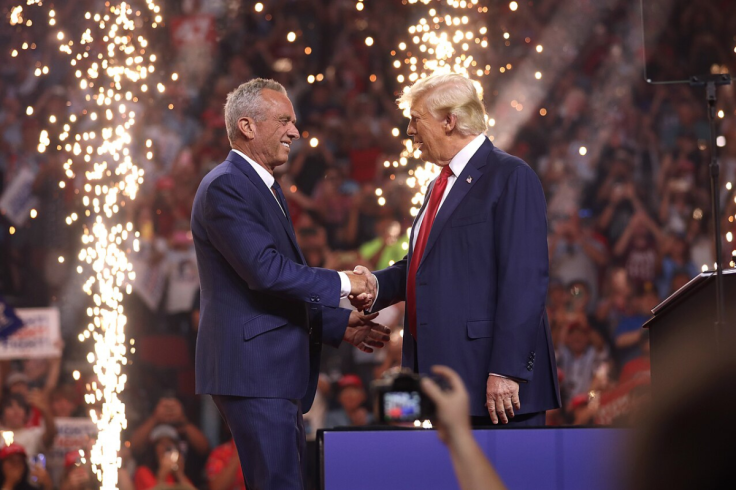
A grassroots revolt over broken health promises has fractured the Make America Healthy Again (MAHA) movement. The split follows sweeping Democratic victories in the US midterms. As first reported by Time, campaigners say anger over pesticide rules, food additives, and chronic illness drove core voters away from Republicans. Activists argue the backlash contributed to Democrats winning control of both the House and Senate, although the extent of MAHA voters' impact remains unclear.
'A lot of people had said they weren't going to vote, and by not voting, they handed the win to the Democrats,' said Zen Honeycutt, founder of Moms Across America. 'That's what happens when you don't fulfil your promises to the American people. They won't show up for you,' she added. Her campaign group endorsed 10 Democratic congressional candidates, nine of whom won their races.
Agricultural Chemicals Spark Voter Backlash
Health campaigners voiced deep anger over Donald Trump's failure to limit chemicals they consider harmful. In February, the administration prioritised American production of glyphosate, a weedkiller that has been the subject of lawsuits alleging a link to cancer. Activists condemned the move as a direct concession to corporate agribusiness lobbies.
'Trump promised to go after pesticides, autism, childhood chronic illness. He shook Bobby Kennedy's hand and promised to let him go wild. He did not fulfil that promise,' Honeycutt said.
'He did not do anything substantial about pesticides. In fact, he made it worse,' she added. 'I was disgusted. It was a clear example of how this Administration is heavily influenced by Big Ag and chemical corporations.'
Frustration grew when the US Environmental Protection Agency approved five pesticides containing toxic 'forever chemicals' known as PFAS. A recent activist scorecard revealed that the White House had broken 37 out of 42 health commitments.
Vaccine Scepticism Divides Health Campaigners
The MAHA movement gained national attention in 2024 when Robert F. Kennedy Jr. endorsed Trump. Kennedy was later appointed to lead the Department of Health and Human Services.
Doctors and researchers criticised Kennedy for slashing vaccine research funding and targeting routine childhood immunisation schedules. Cracks soon widened within the alliance when top adviser Calley Means abruptly resigned over stalled food reforms.
Health experts argue the movement suffered from obvious conflicts between cutting business regulations and banning harmful chemicals.
'It never made sense to expect that this Administration, with its antiregulatory and pro-business position, would have been able to execute on a platform that included restrictions of dangerous chemicals,' said Dr Peter Lurie of the Center for Science in the Public Interest.
While many MAHA campaigners remain sceptical of vaccines, national polling shows that the American public overwhelmingly supports routine childhood immunisations.
Democrats Court Health Voters
Capitalising on Republican divisions, several newly elected Democrats ran on bold environmental and public health pledges.
In Michigan, Dr Abdul El-Sayed won a key Senate seat after promising strict crackdowns on agricultural toxins. In South Carolina, paediatrician Dr Annie Andrews flipped another seat, campaigning to protect childhood immunisations and calling for Kennedy's removal.
Health experts stress that tackling chronic disease demands sound science, clean water infrastructure, and easy access to preventive care.
Activists warn that neither party can take health voters for granted as focus shifts to future elections. Anyone seeking guidance on food safety and chemical standards should consult independent scientific bodies or local public health services.