
Mum Ignores Screen Time Warnings, Lets Her Kids Have Eight Hours a Day and Use Two Devices at Once
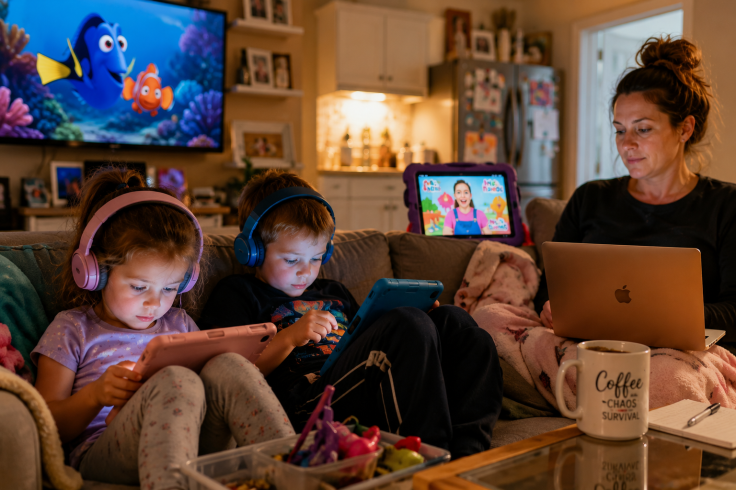
A mother of two permits her young children eight times the recommended daily screen limit, ignoring official health warnings. The 29-year-old mother, Britt Jones, allows her four-year-old and six-year-old unlimited access to digital devices.
This choice directly contradicts guidance issued by the Government in March, which recommends a one-hour daily limit for preschoolers. Jones admitted in an interview with Metro that her children log around four hours on school days and eight on weekends.
The mother remains completely unconcerned by official directives, stating that shifting advice does not influence her parenting choices. She explained that screens turn on at wakeup, staying active through mealtimes, after-school hours, and evening family routines.
Kids Use Two Devices Simultaneously
Jones explicitly allows her children to double screen, using two devices at once throughout their daily activities. They routinely watch classic films like Nemo on television while playing interactive tablet games at the same time.
The children even take their tablets outside to aid outdoor play, maintaining continuous digital stimulation everywhere they go. Although Jones admits worrying about attention spans, she feels the sensory elements provided by multiple devices outweigh any potential drawbacks.
To ensure safety across screens, she and her husband curated algorithms on YouTube Kids to block adult material. The children scroll independently to watch programmes like Ms Rachel, Bing, Blippi, Talking Hands, Oxbridge Baby makaton, and Mr Tumble.
They also play educational games like Numberblocks and Alphablocks without restrictive time boundaries set by their parents. Jones notes that television keeps them entertained while both adults work, providing an alternative when one-on-one teaching is impossible.
Visiting parents express no concern regarding household screen habits during regular playdates held at her home. Jones stated that most of her friends parent in the same way and allow their own children extensive viewing time.
Friends and relatives remain supportive of her overall approach because the children participate in regular physical sports. Jones was raised in a background-TV home herself and feels completely comfortable maintaining that same environment for her family today.
Expert Warnings and Parental Reality
Academic researchers emphasise that heavy digital consumption can carry severe developmental risks for growing children and their overall wellbeing. A study commissioned by the 1001 Critical Days Foundation found risks including delayed language skills, sleep disruption, and reduced caregiver bonding.
Social psychologist Professor Jonathan Haidt warns that phone-based childhoods cause sharp rises in youth mental illness among young people. A King's College London study revealed that nearly 25 per cent of young people exhibit behavioural addiction symptoms.
American Academy of Pediatrics guidelines advise against screens for babies and limit preschoolers to less than one hour daily. However, national survey data from Common Sense Media shows that very few families follow these strict expert targets in daily life.
Children aged two to four average two point five hours daily, which is double the recommended paediatrician limit. Surveyed mother Henja Flores uses Ms Rachel for sign language while making lunch, feeling that mothers desperately need breaks.
Paediatricians like Dr Whitney Casares note that screens are often the easiest distraction option for busy working households. Dr Nusheen Ameenuddin adds that experts understand lifestyle realities, while Jacqueline Nesi advises against demonising all screen time.
For Jones, balancing daily parental duties means trusting her personal approach over rigid government guidelines and warnings. She remains confident that constant digital media access ultimately benefits her children's overall learning and daily home routine.