
Psychologist Calls Trump's Veterans Day Speech an 'Incoherent Mess' and Claims He Struggled To Read and Speak
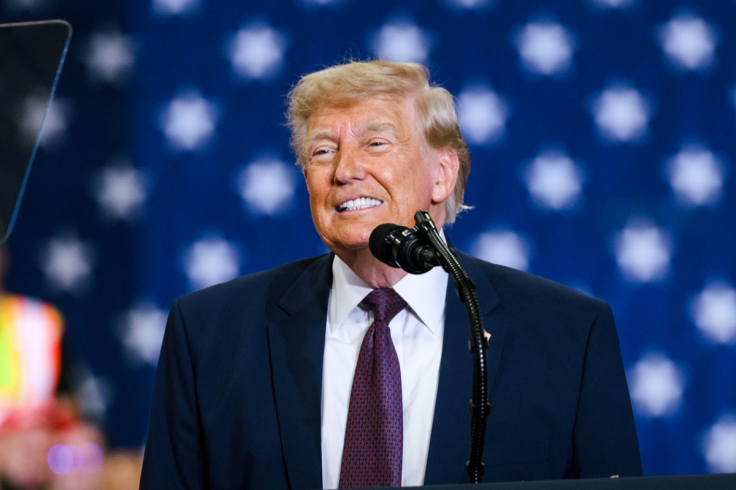
A clinical and forensic psychologist has questioned Donald Trump's speech delivery during a Veterans Day address, describing parts of it as an 'incoherent mess'.
Dr John Paul Garrison raised concerns after reviewing footage of the US president speaking at Arlington National Cemetery in Virginia on 11 November.
In a video posted to his YouTube channel, Garrison said Trump appeared to struggle with reading and speaking clearly. He also highlighted an apparent change in the president's voice towards the end of the address.
'Within the first few seconds of speaking, he is already struggling, he can't articulate himself well,' Garrison said. He added that Trump appeared to struggle when moving away from the teleprompter.
The psychologist also questioned the president's movements during the ceremony, including his apparent difficulty maintaining a salute and repeated body movements.
Psychologist Questions Trump's Speech and Movements
Garrison said Trump's speech changed noticeably towards the end. He suggested the sudden shift in delivery could have marked the end of a neurological event.
'I really don't think he understands what he's saying,' he said in a separate video. 'The way that he sounded shifted so dramatically.'
However, Garrison was interpreting publicly available footage, not making a medical diagnosis. The speech alone cannot establish whether Trump experienced a neurological event or has a cognitive disorder.
Garrison is a clinical and forensic psychologist. There is also no indication that he examined the president or reviewed his medical records.
His comments come amid wider speculation about Trump's health. Cognitive neuroscientist Dr Frank George previously suggested that Trump's unusual walking pattern could be consistent with frontotemporal dementia.
George discussed his observations during an interview with political commentator David Pakman. He also acknowledged that similar movement problems can have several different causes.
What Is Frontotemporal Dementia?
Frontotemporal dementia (FTD) refers to a group of disorders that damage the frontal and temporal lobes of the brain. These areas help regulate personality, behaviour, language and movement.
Symptoms can include changes in personality, reduced social awareness, difficulty finding words and problems with movement. The condition can affect people differently, depending on the areas of the brain involved.
However, an unusual walking pattern or change in speech cannot confirm FTD. The US National Institute on Aging says diagnosis involves reviewing symptoms and medical history, assessing cognitive and physical functions, and sometimes using brain imaging.
Doctors must also consider other possible explanations for symptoms. These can include other neurological conditions and medical problems.
White House Says Trump Remains in Excellent Health
The White House has repeatedly rejected suggestions that Trump's health prevents him from performing his duties.
In May 2026, presidential physician Captain Sean Barbabella said Trump remained in excellent health following his annual medical examination at Walter Reed National Military Medical Center.
Barbabella reported strong cardiac, pulmonary and neurological function. He also described the president's cognitive and physical performance as excellent.
The physician said Trump was fully fit to carry out his responsibilities as commander-in-chief. The White House released the assessment but has not publicly confirmed the neurological concerns raised by Garrison or George.
Neither psychologist has publicly established a diagnosis of dementia in Trump. Without a clinical assessment, claims about a specific neurological condition remain speculation rather than confirmed medical findings.