
Stephen Curry's Painful Injury Has a Much Bigger Reach Than Basketball, Here's Who Else Is at Risk
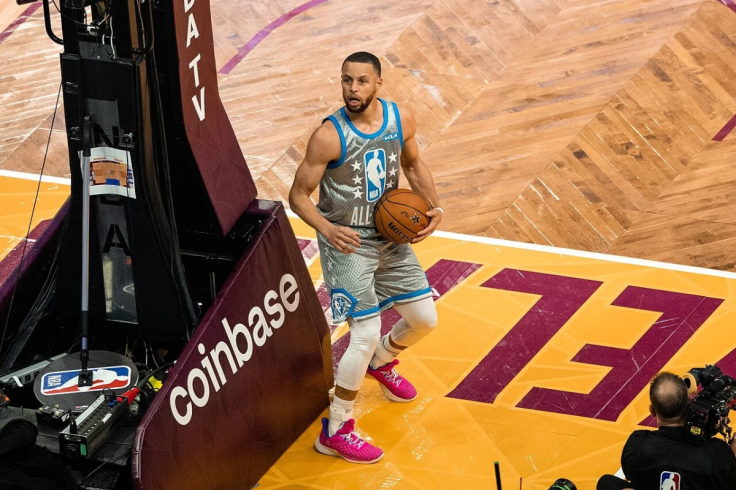
Stephen Curry's torn oblique ended his night in Houston after he grimaced while backpedaling following a three-pointer. The injury affects muscles used in twisting and rotating the trunk and can occur in athletes and people performing everyday activities.
The 38-year-old Golden State Warriors guard left Wednesday's game against Houston in the first quarter after grimacing and grabbing his right side following a three-pointer. An MRI confirmed an oblique abdominal tear, and he will be re-evaluated in two weeks.
Warriors coach Steve Kerr said Curry told him he had tweaked something in his abdominal area and had never done it before. After the game, but before imaging results, Kerr acknowledged, 'Concern is high.'
The obliques run down either side of the abdomen and work together when people twist or rotate at the core. Pain in these muscles often stems from an injury known as 'side strain'.
INJURY UPDATE: Golden State Warriors guard Stephen Curry, who exited last night’s game at Houston with 6:25 remaining in the first quarter due to injury, underwent an MRI last night.
— Golden State Warriors (@warriors) November 12, 2026
The MRI confirmed that Curry has an oblique abdominal tear. He will be reevaluated in two (2)… pic.twitter.com/ZnPE4eByn2
Who Else Is at Risk
Oblique injuries can occur in sports involving repetitive trunk rotation, throwing or forceful movements, including baseball, cricket, tennis and golf.
A 2022 case series examining 10 years of data from a Japanese professional baseball team identified 28 internal oblique muscle strains among 23 players, representing 12.2 per cent of the 188 players studied. Most injuries occurred where the muscle attaches to the lower ribs.
A 2017 study using Major League Baseball injury data found that 56 per cent of oblique injuries occurred among hitters and 44 per cent among pitchers. The leading side, defined as the side opposite a player's dominant batting or throwing side, was affected in 77 per cent of cases.
The oblique muscles help transfer force through the trunk during rotational movements, making them particularly vulnerable to injury during powerful swings and throws.
Beyond Baseball and Basketball
Golfers have also experienced oblique injuries. Tiger Woods withdrew from The Northern Trust in August 2019 because of a mild oblique strain. Rickie Fowler separately withdrew from the 2018 Northern Trust after revealing that an MRI had confirmed a partial tear in his right oblique.
A 2024 case report described two collegiate male hockey players who suffered avulsion injuries, in which the oblique muscles separated from their attachments at the iliac crest, following direct impacts while their bodies were rotated. Both returned to game participation within six weeks after conservative rehabilitation.
Cole Pain Therapy Group, a Memphis-area clinic, says oblique strains occur in daily activities with sudden twisting, lifting or awkward reaching. Non-athletes may struggle to lift, reach overhead or rise from a chair.
Warning Signs and Recovery
Strains often cause a sudden sharp or pulling sensation along the side of the trunk. Some people feel a pop, and symptoms of a muscle tear can include sudden, severe pain, weakness, cramping, swelling or bruising.
Oblique strains typically cause localised pain that worsens with movements such as twisting, bending, coughing or stretching the affected muscles. However, abdominal pain can have several causes, and symptoms alone cannot reliably distinguish a muscle injury from an internal medical condition.
Recovery depends on the severity of the injury. Mild oblique strains may heal within a few weeks, while moderate injuries can take several weeks or longer. Severe tears may require months of rehabilitation and, in some cases, surgery.
A study of Major League Baseball players found that hitters missed an average of 27 days following oblique injuries, compared with 35 days for pitchers. Fielders in the Japanese baseball case studies returned to play sooner than pitchers.
Treatment and Prevention
Most oblique strains can be managed without surgery, although treatment depends on the severity of the injury. Options may include rest, ice, compression, appropriate pain medication and physical therapy. All players in the 2022 Japanese baseball study eventually returned to play.
The American Academy of Orthopaedic Surgeons recommends regular conditioning, proper warm-ups, controlled stretching and cool-down exercises to help reduce the risk of muscle injuries.
Returning to strenuous activity before an injury has healed can increase the risk of reinjury. Curry's re-evaluation in two weeks should provide a clearer picture of his recovery and potential return to play.