Hair Loss in Men Explained: Causes, Warning Signs and Treatments That Can Help
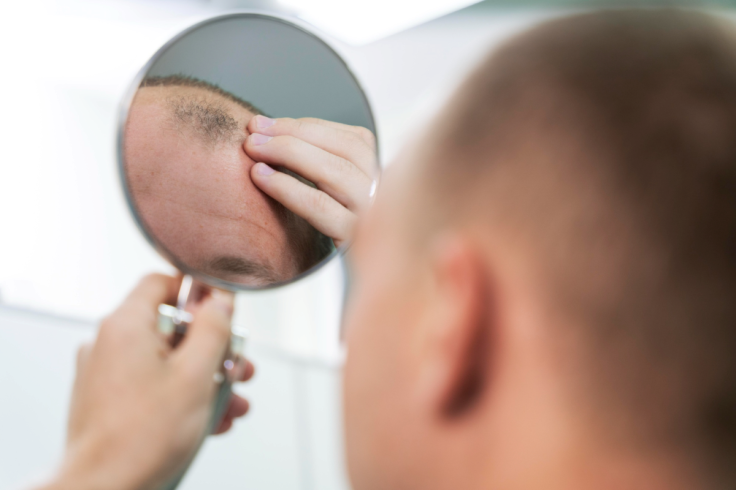
Hair loss is one of the most common concerns among men, affecting confidence, appearance and emotional well-being.
While losing some hair each day is normal, noticeable thinning, a receding hairline or bald patches can signal an underlying process that may require attention.
The most common cause of hair loss in men is male pattern baldness, also known as androgenetic alopecia. It is a gradual, genetically influenced condition linked to hormones, particularly a derivative of testosterone called dihydrotestosterone (DHT).
'By far the most common cause is androgenetic alopecia (male pattern baldness), which affects at least half of all men, with prevalence climbing steadily with age,' said Dr Laura Glaser, DNP, APRN, FNP-BC, founder of AURAE Modern Medical.
Although male pattern baldness is extremely common, experts say early recognition matters because many treatments work best when started before significant hair loss occurs.
What Causes Hair Loss in Men?
Hair loss can happen for several reasons, but genetics and hormones account for the majority of cases.
Male pattern baldness is a hereditary condition caused by a combination of genetic factors, hormones and ageing.
Dr Glaser explained that genetics are the strongest predictor, with family history significantly increasing a man's likelihood of developing the condition.
'A family history makes a man roughly two to three times more likely to develop it, and up to four times more likely to see it progress,' she said.
The condition is polygenic, meaning multiple genes are involved. It can be inherited from both sides of the family, not just through the mother's side as a common myth suggests.
Male pattern baldness usually begins after puberty and progresses gradually over years or decades.
The Role of DHT in Hair Loss
DHT plays a central role in male pattern baldness.
An enzyme called 5-alpha-reductase converts testosterone into DHT. In men who are genetically sensitive to DHT, the hormone attaches to receptors in certain scalp follicles, particularly around the hairline and crown.
This triggers a process called miniaturisation.
'With each growth cycle the follicle spends less time growing and shrinks a little more, so thick pigmented hairs are gradually replaced by fine, short, barely-visible ones,' Dr Glaser explained.
Importantly, the follicles usually do not completely disappear. Instead, they become smaller, which is why early treatment can help preserve and improve hair growth.
Early Signs of Male Hair Loss
Because hair loss often develops slowly, many men do not notice changes until thinning becomes obvious.
Common early warning signs include:
- A receding hairline, particularly at the temples
- An 'M'-shaped hairline
- Thinning around the crown
- More visible scalp under bright lighting
- Hair becoming finer or weaker
- Reduced overall hair volume
- A widening parting
Dr Glaser said changes may be easier to identify through photographs rather than a daily mirror check.
'Comparing photos from a few years ago is often more telling than the daily mirror,' she said.
How Much Hair Shedding Is Normal?

Some daily shedding is completely normal. Most people lose around 50 to 100 hairs per day as part of the natural hair growth cycle.
However, certain patterns may indicate a problem.
Men should seek advice if they notice:
- Hair falling out suddenly
- Large amounts of shedding over a short period
- Hair coming out in clumps
- Distinct bald patches
- Scalp itching, pain, redness or scaling
Dr Glaser explained that male pattern baldness usually involves gradual thinning rather than sudden shedding.
'A sudden, diffuse shed usually points to a different cause, such as telogen effluvium,' she said.
Other Causes of Hair Loss in Men
Not all male hair loss is caused by genetics. Several other factors can affect hair growth.
Stress and illness
Telogen effluvium is a temporary form of hair shedding that can occur several months after a major physical or emotional stressor.
Triggers may include:
- Serious illness
- Surgery
- Rapid weight loss
- Severe stress
- Significant lifestyle changes
Nutritional deficiencies
Hair requires adequate nutrients to grow properly.
Deficiencies linked with hair changes include:
- Low iron levels
- Low vitamin D
- Zinc deficiency
- Insufficient protein intake
Correcting a deficiency can improve hair growth, but supplements will not reverse genetic male pattern baldness unless a deficiency is present.
Thyroid disorders and medical conditions
Both an underactive and overactive thyroid can affect hair health.
Other possible causes include:
- Alopecia areata, an autoimmune condition causing round bald patches
- Scalp infections
- Psoriasis
- Seborrhoeic dermatitis
- Certain medications
When Should Men See a Doctor?
Although male pattern baldness is common, sudden or unusual hair loss should be assessed.
Dr Glaser recommends seeking medical advice if hair loss is:
- Rapid or sudden
- Patchy
- Associated with scalp symptoms
- Accompanied by fatigue, weight changes or brittle nails
A healthcare provider may examine the scalp, review medical history and ask about family history, medications, recent illnesses and lifestyle factors.
Tests may include thyroid function, iron levels, ferritin, vitamin D levels and a complete blood count if another cause is suspected.
Treatments for Male Hair Loss
Several evidence-based treatments can help slow hair loss and encourage regrowth.
Minoxidil
Minoxidil is one of the most widely used treatments for male pattern baldness.
Available as a topical treatment and, in some cases, a low-dose oral medication, it works by extending the hair growth phase and supporting follicle activity.
However, it must be used consistently. Stopping treatment usually causes the benefits to gradually reverse.
Finasteride
Finasteride works by blocking the enzyme responsible for converting testosterone into DHT.
It can reduce DHT levels and is one of the most effective medications for slowing male pattern baldness.
However, some men may experience side effects, including sexual side effects, so treatment decisions should be discussed with a healthcare professional.
Low-level laser therapy
Low-level laser therapy uses red light to stimulate hair follicles.
Evidence suggests it may provide modest benefits, although results vary between individuals.
Platelet-rich plasma (PRP)
PRP involves injecting a concentration of the patient's own growth factors into the scalp.
Some studies suggest it may improve hair density, although treatment methods are not yet standardised.
Hair transplant surgery
Hair transplants involve moving hair follicles from areas resistant to DHT, usually the back and sides of the scalp, to thinning areas.
Results can be long-lasting, but experts often recommend combining surgery with medical treatments to protect existing hair.
Can Lifestyle Changes Prevent Hair Loss?
A healthy lifestyle can support overall hair health, but it cannot completely prevent genetically driven male pattern baldness.
Helpful habits include:
- Eating a balanced diet with adequate protein
- Managing stress
- Getting enough sleep
- Avoiding smoking
- Maintaining a healthy weight
However, Dr Glaser said supplements are often overpromoted.
'For genetic pattern baldness, no supplement reverses the underlying process,' she said.
Common Myths About Male Hair Loss
Many popular beliefs about hair loss are inaccurate.
Wearing hats does not cause baldness, and shaving the head does not make hair grow back thicker. Shaved hair may feel coarser because it grows back with a blunt edge, but the follicle itself is unchanged.
Another misconception is that hair loss is unavoidable and untreatable with age.
While male pattern baldness becomes more common as men get older, treatments can slow progression and improve outcomes, especially when started early.
Conclusion
Hair loss in men is common, but it is not something that must simply be accepted. Male pattern baldness is usually driven by genetics and hormones, but other causes such as stress, nutritional deficiencies and medical conditions can also play a role.
Recognising early signs, seeking professional advice when changes occur and using evidence-based treatments can help men protect existing hair and make informed decisions about their options.