
Health Insurers Get Lower Approval Than Trump as Anger Over Denied Claims Fuels Medicare for All Push
A survey by Republican polling firm OnMessage found that 78 per cent of voters held an unfavourable view of health insurance companies. Separately, an October 2026 Axios-Ipsos survey found that just 20 per cent of Americans trusted Donald Trump for health-related information, down from 31 per cent in March 2025.
Anger centres on premiums and claims denials, leaving patients facing bills despite paying for coverage. The dispute has fuelled record support for Medicare for All.
Denied Care Drives Public Anger
Ari Melber of MS NOW reported that anger continued after the 2024 killing of a company executive. Many Americans shared online stories about denied claims, including cases involving people who had paid for insurance.
Six in 10 voters worry about affording healthcare, according to a KFF poll. Medical costs rank alongside petrol and other transport expenses as leading economic concerns, and unavoidable bills can contribute to bankruptcy.
Insurance does not guarantee that treatment will be approved or affordable. Denials can force patients to weigh medical needs against costs, although the polling does not quantify those outcomes.
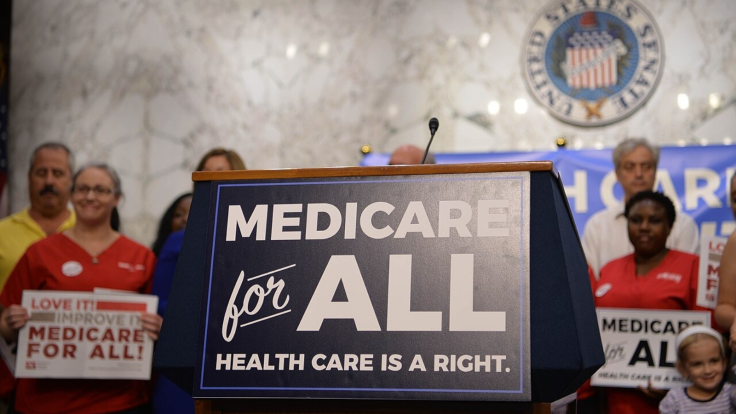
Melber said voters now prefer Democrats on healthcare, while candidates backing greater private insurer involvement face public scepticism. Democratic campaigns increasingly promote Medicare for All, with some describing healthcare as a human right.
Record Backing, Partisan Divide
Medicare for All once divided Democratic presidential candidates. Joe Biden favoured Obamacare over Bernie Sanders' plan, but the debate has shifted towards demands for affordable coverage.
The KFF poll found 66 per cent supported Medicare for All, its highest level in 10 years and up from roughly half in 2020. A separate Ipsos survey of 1,122 adults found 43 per cent support.
In the Ipsos survey, 62 per cent of Democrats and 47 per cent of independents supported Medicare for All, while 52 per cent of Republicans opposed it. The separate KFF poll found support among 84 per cent of Democrats and 72 per cent of independents, while 66 per cent of Republicans opposed the proposal.
Senate hopeful Abdul El-Sayed described the plan as guaranteed insurance from birth until death, without premiums, copayments or deductibles. US Representative Pramila Jayapal's bill has at least 117 House cosponsors.
Press secretary Allison Schuster said Trump was taking unprecedented steps to lower costs and improve care. She cited drug price agreements and a women's health division at the National Institutes of Health.
Schuster cited one-time $90 (£67) payments to more than 20 million eligible Medicare Part B enrollees and $500 (£374) refunds for nearly one million people whom the Trump administration said had been overcharged for Obamacare coverage. Fewer than 20 per cent trusted Trump on health.
In the October 2026 Axios-Ipsos survey, 53 per cent of respondents said they had a great deal or a fair amount of trust in health information from the US Centers for Disease Control and Prevention, down from 62 per cent in March 2025. Only 25 per cent said they trusted Health and Human Services Secretary Robert F. Kennedy Jr. for health-related information.
Trade-Offs Shake Public Support
Support weakened when respondents considered possible drawbacks. The KFF poll found 76 per cent opposed the plan if it could delay medical tests and treatments, while 64 per cent objected to higher taxes.
Another 61 per cent opposed it when told it threatened existing Medicare. Support rose to 76 per cent when respondents heard coverage would be a right, and to 75 per cent when told premiums and cost-sharing would end.
Among Ipsos opponents, the leading concern was poorer care quality than private insurance, followed by taxpayer costs. Critics warn that removing cost-sharing could increase demand without enough doctors and nurses.
Patients could gain insurance yet struggle to book appointments, making workforce capacity a key question for access. The survey suggested many people could not clearly define Medicare for All.
An Urban Institute analysis estimated that an enhanced single-payer healthcare system would increase federal spending by about $34 trillion over the 2020–29 period, while shifting substantial existing healthcare expenditure from private and state sources to the federal government. Brian Blase of the Paragon Health Institute cited annual costs of $3 trillion to $4 trillion (£2.2 trillion to £3 trillion).
Melber said shifting public opinion could help build a congressional coalition to challenge insurer practices. Republicans such as Senator Ted Cruz argue single-payer healthcare would be too costly and disruptive.