
Driving Instructor Dies After Three 999 Calls but No Ambulance Was Available, Coroner Says He Could Have Survived
David Mann should still be alive. A coroner has ruled he probably would have survived had an ambulance reached him in time.
Three 999 calls were made from the scene, but no ambulance came. His student's mother, an off-duty GP, rushed to help while they waited.
She travelled with the family as his wife, Elaine, drove him to Alexandra Hospital in Redditch herself. She made a fourth call en route to say they were on their way.
He fell ill in January teaching a 17-year-old learner driver. He suffered a cardiac arrest on arrival at hospital and later died.
Cardiac arrest can kill within minutes, but fast CPR and a defibrillator shock can often reverse it. His case has put a spotlight on ambulance delays and public awareness of the condition.
What Cardiac Arrest Is
Cardiac arrest happens when the heart's electrical system fails. It stops beating properly and blood stops reaching the brain.
Without treatment, cardiac arrest is fatal within minutes. This makes it a genuine medical emergency.
Warning signs can include chest pain and breathlessness. Often, though, a person simply collapses with no warning at all.
Why Fast Action Matters
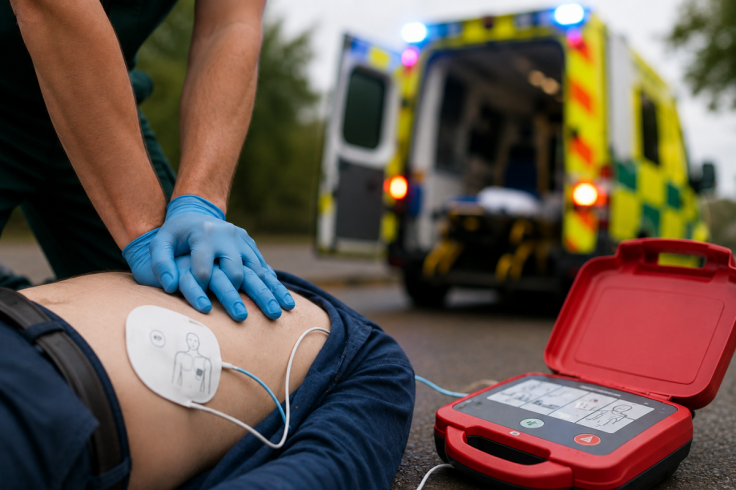
Survival depends heavily on what happens before paramedics arrive. Starting CPR straight away keeps blood and oxygen moving.
A defibrillator can deliver a shock that restores a normal heart rhythm. The sooner that shock comes, the better the chance of survival.
Brain injury can begin after just five minutes without oxygen. Survival rates drop sharply after eight to ten minutes without CPR.
Bystanders are urged to call emergency services immediately. They should begin hands-only CPR and use a defibrillator if one is nearby.
Ambulance Delays a Factor
The pattern of delayed handovers meant no ambulance was free when Mr Mann first called. Two further calls to emergency services also went unanswered.
West Midlands Ambulance Service said it was facing major delays that day. It lost 2,312 hours in total, equivalent to taking 192 ambulances off the road.
The trust said it made more than 250 handover requests. More than 200 were turned down.
NHS England figures show almost 17 per cent of the trust's handovers took over an hour in July. That was the worst rate of any trust.
Coroner Cites Missed Chance
At the hospital, staff carried out chest compressions but did not defibrillate him, in line with guidance at the time. The coroner found this, combined with the ambulance delay, probably cost him his life.
The coroner has since written to the health secretary and NHS England. The aim is to help prevent similar deaths in future.
Trust Apologises to Family
Dr Jules Walton, chief medical officer at Worcestershire Acute Hospitals NHS Trust, apologised to the family. She said the trust accepted there were failings in his care.
She said clinical teams have since had extra training. This covers treating patients with similar symptoms.
Elaine, David's wife, said she did not blame the paramedics for what happened. Her question, she said, was what the government and NHS England were doing about it.
She said her husband had been badly let down, by the ambulance and his care in A&E. His life, she said, had been 'cut too short too soon' and he should still be here.
The Department of Health said too many patients had faced unacceptable delays. It said this had sometimes led to tragic results.
It said teams of experts were being sent to struggling areas, including the Midlands. Their aim is to find out why the delays keep happening.