
What Is Hypoplastic Left Heart Syndrome? The Rare Defect Threatening Newborn's Life
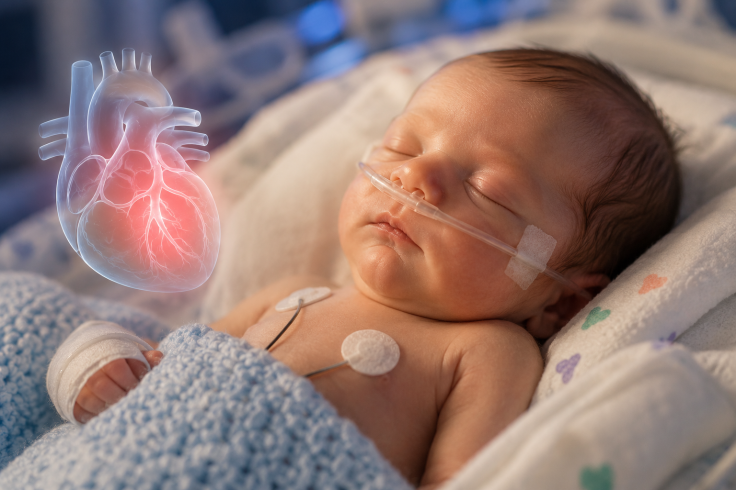
A newborn boy is in critical condition, according to court documents from a closely watched Texas custody case. He was born with one of the most serious heart defects a baby can have.
The condition is called hypoplastic left heart syndrome, or HLHS. It is rare, and it is genuinely life-threatening.
The case involves the baby's biological parents and the surrogate who carried him. But away from the courtroom dispute, doctors say HLHS is a medical emergency for any newborn who has it.
What Is HLHS
HLHS happens when the left side of the heart fails to develop properly in the womb. It disrupts normal blood flow and is classed as a critical congenital heart defect, according to the Centers for Disease Control and Prevention (CDC).
The left side of the heart is too small to pump blood on its own. As a result, the right side takes over, pumping blood to both the lungs and the rest of the body.
Several parts of the heart are affected. These include the left ventricle, the mitral valve, the aortic valve and the ascending aorta.
Many babies with HLHS also have a small hole between the heart's upper chambers. The condition is extremely rare, affecting around one in 3,846 babies in the US each year.
Doctors say the exact cause is usually unknown. Gene changes may play a role, and having one child with HLHS can raise the risk of having another.
Signs and Symptoms
Babies with HLHS are usually very unwell soon after birth. Warning signs include bluish or grey skin, rapid breathing and poor feeding.
Other symptoms include cold hands and feet, a weak pulse and unusual drowsiness. These can take a few days to appear while natural openings in the heart stay open.
Once those openings close, problems can develop fast. Breathing difficulties, a weak pulse and blue-tinged skin are common warning signs at this stage.
Left untreated, the condition can turn fatal within days or weeks. A baby in shock may have clammy skin, a rapid, weak pulse and shallow breathing.
Diagnosing the Condition
HLHS can sometimes be spotted before birth. A routine ultrasound may pick up signs of the defect, according to the CDC.
If a problem is suspected, doctors can order a foetal echocardiogram. This detailed heart scan can confirm the diagnosis.
After birth, doctors may notice symptoms or hear an unusual murmur through a stethoscope. Newborn pulse oximetry screening, which checks blood oxygen levels, can also flag the condition early.
Treatment and Outlook
Treatment often combines medication, specialist feeding support and surgery. Some babies need drugs to strengthen the heart or ease blood pressure.
Others struggle to feed and may need a feeding tube to gain weight properly. Surgery, though, is almost always necessary.
It typically happens in three stages. The Norwood procedure is carried out within two weeks of birth, followed by the Glenn Shunt at four to six months.
The final stage, the Fontan procedure, usually takes place between 18 months and three years old. These operations do not cure HLHS, but they allow the right side of the heart to do the work of both chambers.
Even after surgery, children need lifelong monitoring. Possible complications include irregular heartbeats, fluid build-up and slow growth.
Some children eventually need a heart transplant. Doctors say there is no known way to prevent HLHS, though advances in care have improved the outlook for babies born with it.
Frequently Asked Questions
- What is Hypoplastic Left Heart Syndrome (HLHS)?HLHS is a critical congenital heart defect where the left side of the heart is underdeveloped, affecting normal blood flow.
- What are the symptoms of HLHS?Symptoms include bluish or grey skin, rapid breathing, poor feeding, cold extremities, weak pulse, and unusual drowsiness.
- How is HLHS diagnosed?HLHS can be diagnosed through prenatal ultrasounds, foetal echocardiograms, and postnatal pulse oximetry screenings.
- What treatments are available for HLHS?Treatment includes medication, specialist feeding support, and a series of surgeries: Norwood, Glenn Shunt, and Fontan procedures.
- Can HLHS be prevented?There is no known way to prevent HLHS, but advances in medical care have improved outcomes for affected babies.