
Jalen Hurts Sidelined After Ultrasound Detects Blood Clot Movement, Doctor Explains Risks
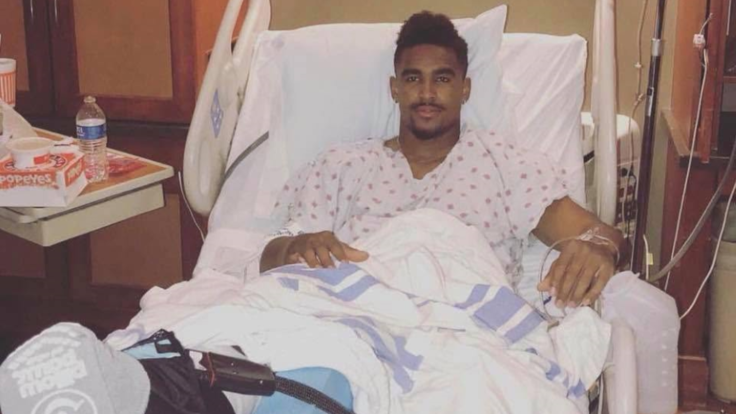
Philadelphia Eagles quarterback Jalen Hurts will miss Sunday's game against the Carolina Panthers after a follow-up ultrasound revealed movement in a blood clot in his calf, raising questions about how a seemingly minor leg injury can become a more serious medical concern.
The Eagles announced on 15 October that the 28-year-old would sit out while the team's medical staff determined the appropriate treatment. The decision came days after Hurts played against the Jacksonville Jaguars in London, despite an earlier scan identifying a superficial blood clot.
The development has drawn attention to the differences between clots near the skin's surface and those that form in deeper veins, where complications can pose a greater threat to health.
Why Did Jalen Hurts Need Another Ultrasound?
According to the Eagles, Hurts sought treatment for his calf on 8 October after being struck by an opponent's cleat during the team's 4 October game against the Los Angeles Rams.
An ultrasound performed after the Eagles travelled to London revealed a superficial blood clot. After reviewing the results, medical staff determined that Hurts could play against the Jaguars, with activity and mobility considered important. Doctors recommended another ultrasound within 72 hours of the game and the return flight.
Hurts played without reported limitations in Philadelphia's 19-17 defeat to Jacksonville on 11 October. However, a follow-up scan on Wednesday night revealed movement in the clot, prompting the team to rule him out against Carolina.
Former Los Angeles Chargers team doctor David Chao said the reported movement could indicate that the clot had extended or that deeper veins might be involved. The Eagles have not clarified the ultrasound finding, so the precise extent of Hurts' clot remains unclear.
How Dangerous Is a Superficial Blood Clot?
A superficial blood clot forms in a vein close to the skin's surface. Such clots can develop after an injury, although the precise cause of Hurts' clot has not been publicly confirmed.
These clots are generally less concerning than deep-vein thrombosis (DVT), which develops in deeper veins, commonly in the legs. However, superficial clots should not automatically be dismissed as harmless because some can extend into the deeper venous system.
A DVT can become life-threatening if part of the clot breaks away and travels through the bloodstream to the lungs, blocking blood flow in a condition called pulmonary embolism.
Chao has explained that if Hurts' clot has extended into a deep vein, his absence could be considerably longer. However, the Eagles have not publicly confirmed a DVT or pulmonary embolism, and the precise extent of the clot remains unclear.
What Symptoms Should People Watch For?
Blood clots do not affect only professional athletes. Leg pain, tenderness, swelling, redness, and warmth can be warning signs, although these symptoms may resemble a muscle injury.
Sudden shortness of breath, chest pain that worsens with breathing, coughing up blood, or fainting may indicate a pulmonary embolism and require emergency medical attention.
What Determines Recovery?
Treatment depends on the clot's location, size, progression and the individual's overall risk. Some superficial clots require monitoring and measures to ease symptoms, while others may need anticoagulant medication to reduce the risk of further clotting.
For contact-sport athletes, treatment decisions can be particularly complicated. Anticoagulants can increase the risk of bleeding after collisions, so any return to football requires careful medical assessment.
The Eagles have not announced Hurts' treatment plan or a return date. His next steps will depend on further medical evaluation, including whether the clot stabilises and what treatment is required.